
UEH’s Contribution at the Innovation Initiative Forum in Can Tho


On the morning of December 9, 2025, within the framework of the Launching Ceremony for the Week of Science, Technology, Innovation, and Digital Transformation of Can Tho City 2025, the Innovation Initiative Forum themed “Can Tho – A Livable City” took place with the participation of city leaders, departments, experts, scientists, and enterprises from the Mekong Delta region.
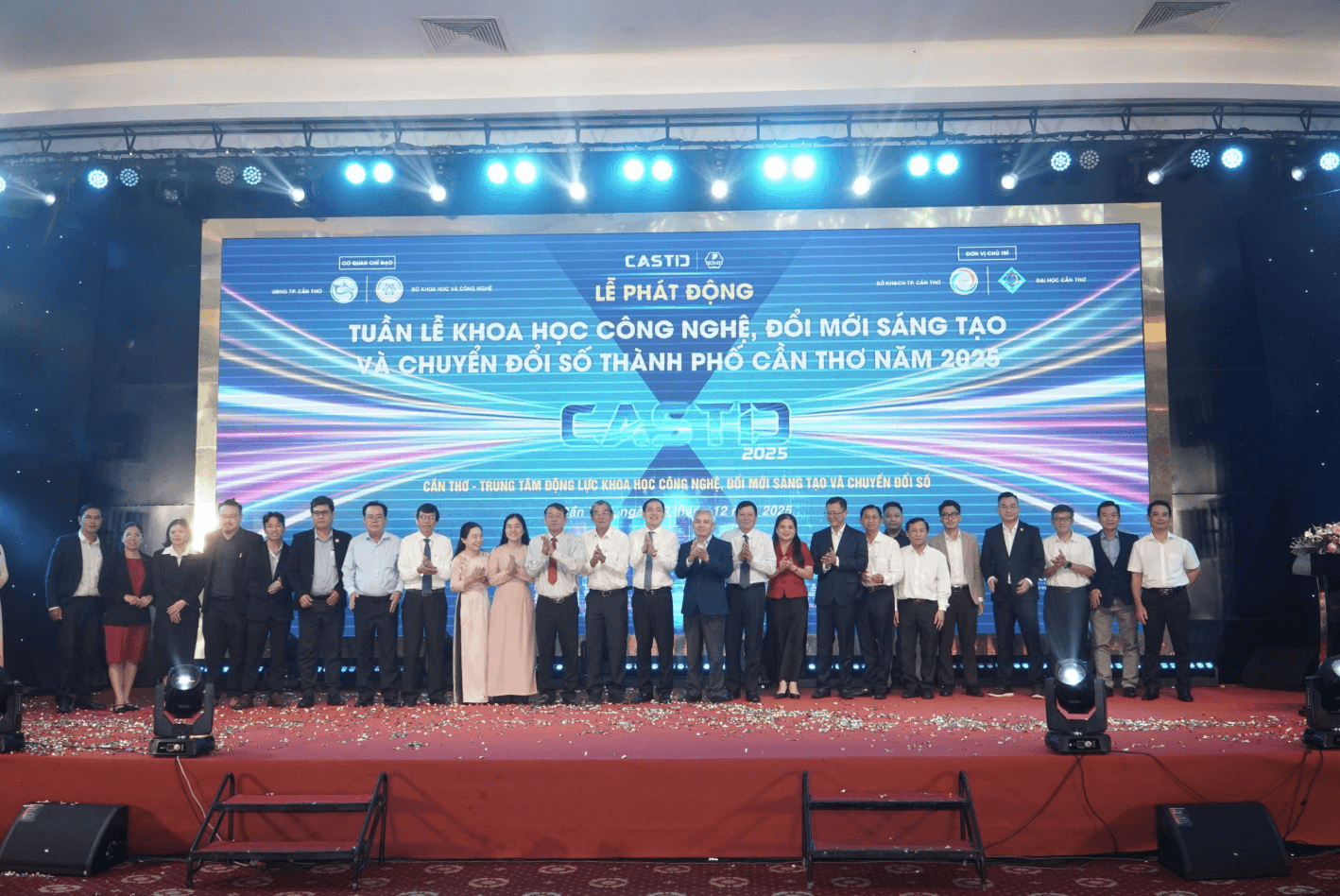
The University of Economics Ho Chi Minh City (UEH) joined the forum with research teams from the Institute of Smart City and Management (ISCM) and the Institute of Intelligent and Interactive Technologies (3i), under the School of Technology and Design. Representing UEH, Dr. Nhieu Nhat Luong and PhD Candidate Do Le Phuc Tam delivered key presentations, initiating a series of in-depth exchanges developed by the UEH research group throughout the discussion session.
The contributions focused on two critical pillars for Can Tho: modern logistics infrastructure and smart city development oriented towards digital transformation and inclusive growth.
Logistics – The “Backbone” of a City
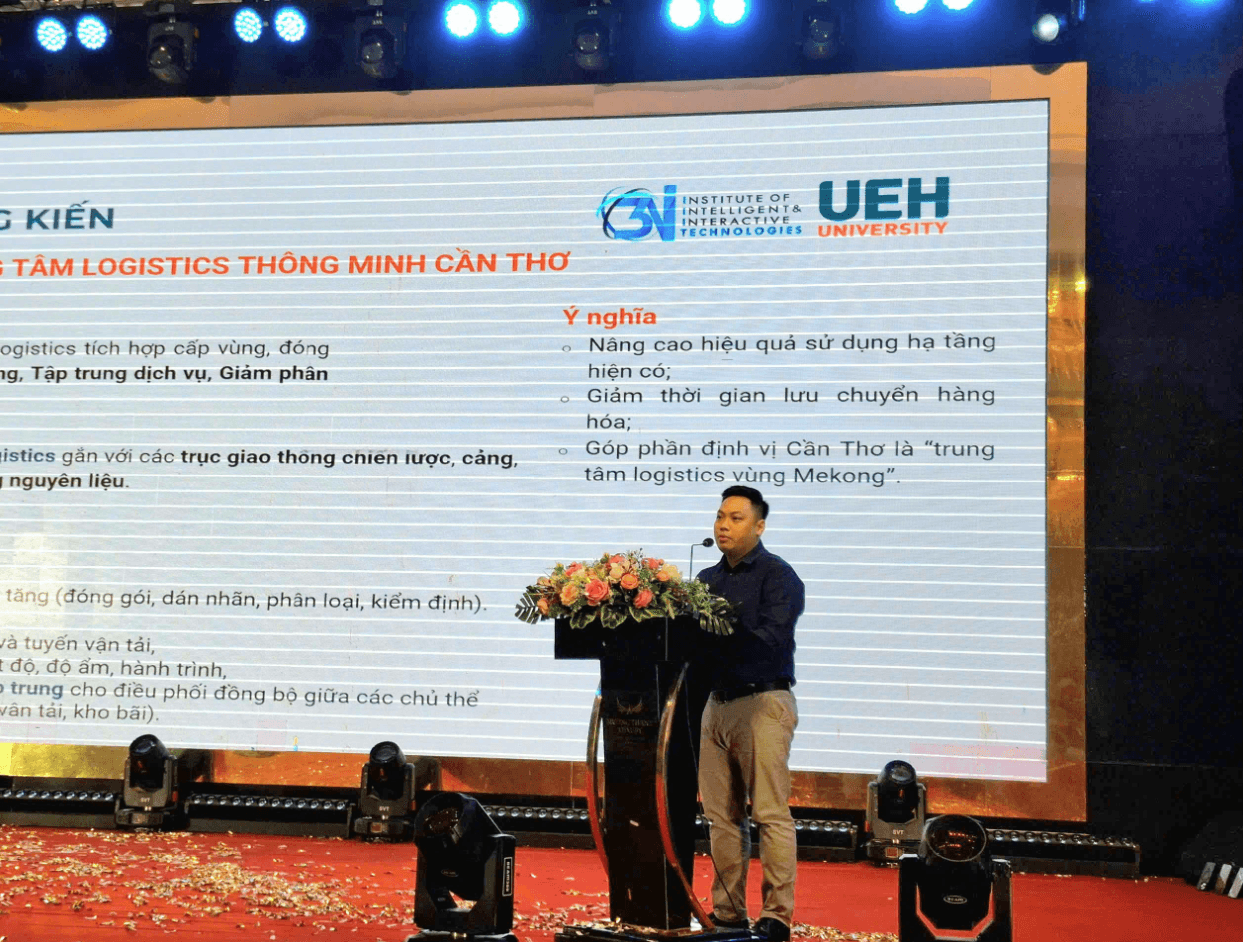
The research team emphasized the essential role of logistics infrastructure in enhancing urban economic performance and the supply chain efficiency of the Mekong Delta. They proposed five breakthrough solutions for Can Tho, including:
Establishing a regional logistics hubs network and cold-chain logistics for agriculture and aquaculture sectors.
Developing a digital logistics platform based on IoT, Big Data, and AI.
Promoting multimodal logistics, leveraging the strengths of waterway transport.
Advancing green logistics aligned with the circular economy.
Building a high-quality logistics human resources development center for the entire region.
These proposals aim to optimize costs, reduce post-harvest losses, enhance the competitiveness of agricultural products, and support Can Tho’s sustainable development goals.
Smart City – Appropriate Technology and Inclusive Development
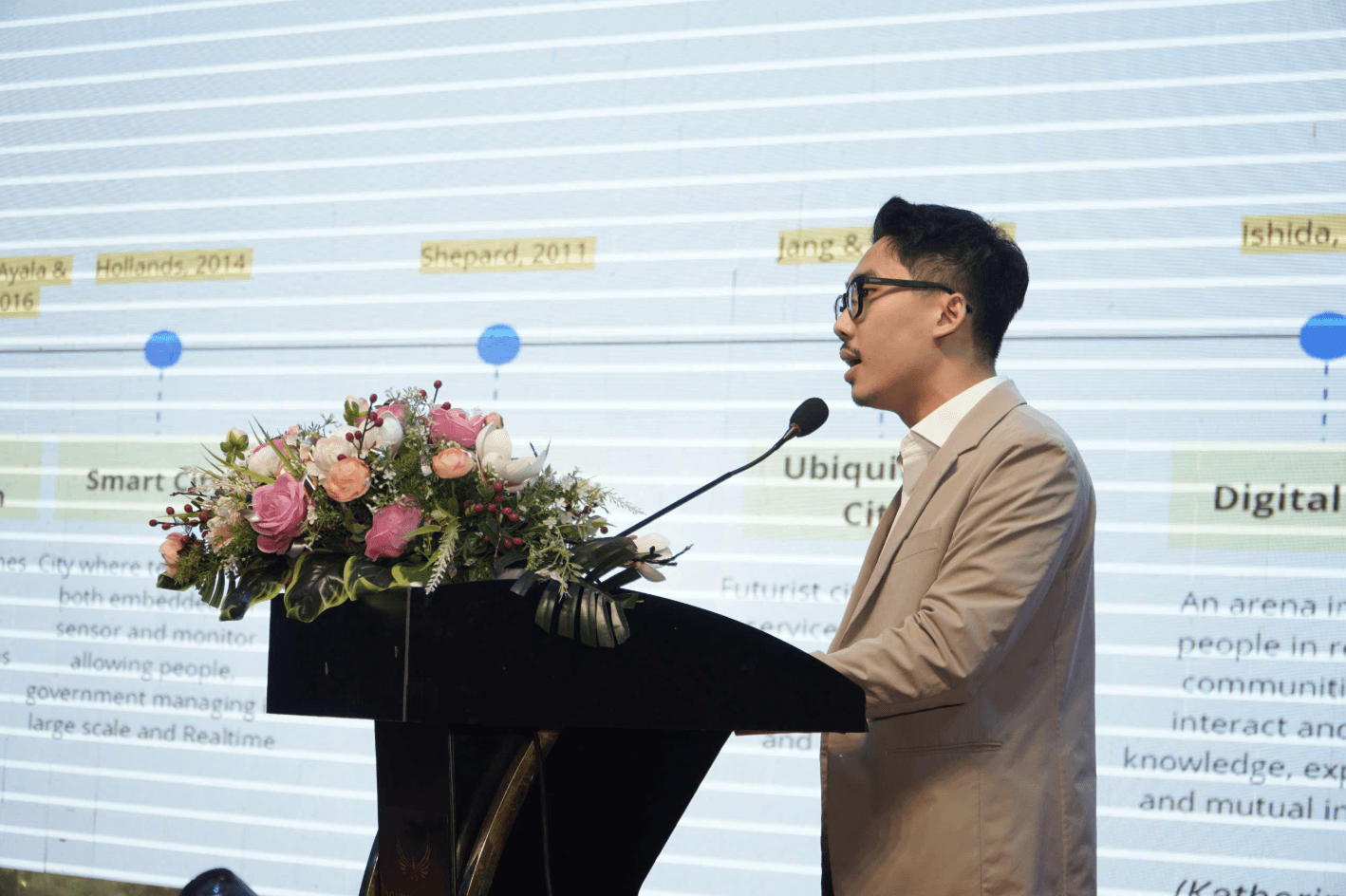
From an urban development perspective, the ISCM research team emphasized that a smart city is not defined by deploying as much technology as possible, but by using appropriate technology to address urban challenges within specific resource conditions.
Key discussion points included:
Digital transformation as the fundamental foundation, restructuring governance and urban services toward digital government – digital economy – digital environment.
Analysis of key urban challenges: environment, climate change, uncontrolled urban expansion, and resource pressures.
Insights from international indices (IMD Smart City Index, CIMI), highlighting both the potential and current limitations of Vietnamese cities.
Proposing a “Global mindset – Local commitment” approach, linking smart cities with inclusive development strategies.
Highlighting the Living Lab model—where government, researchers, businesses, and communities co-create and test urban solutions in real-life conditions.
Affirming UEH’s Academic and Policy Advisory Role
Through the two presentations on modern logistics and smart cities, UEH continues to demonstrate its role as a center of knowledge and innovation, contributing meaningfully to Can Tho’s development strategies in this new phase.
The proposals from the UEH research team not only hold scientific value but also provide useful references for policymaking in logistics infrastructure, digital transformation, smart city development, and the vision of “Can Tho – A Livable City.”
Content and photos: ISCM & 3i