
Expanding Connections, Creating Opportunities: ISCM Advances Collaboration for Education, Research, and Learners


March marked a vibrant period of engagement for the Institute of Smart City and Management (ISCM) as it connected with a wide range of partners in Vietnam and abroad, including the University of Auckland (New Zealand), GS E&C (South Korea), the Center for Urban Science+ Progress (CUSP) at New York University (United States), Ghost Analytics (Australia), Cloudmap (Vietnam), Rainlab under Water Solutions South-East Asia, and international scholars. More than courtesy meetings, these exchanges opened up concrete avenues for collaboration in education, research, and student-focused initiatives at ISCM.
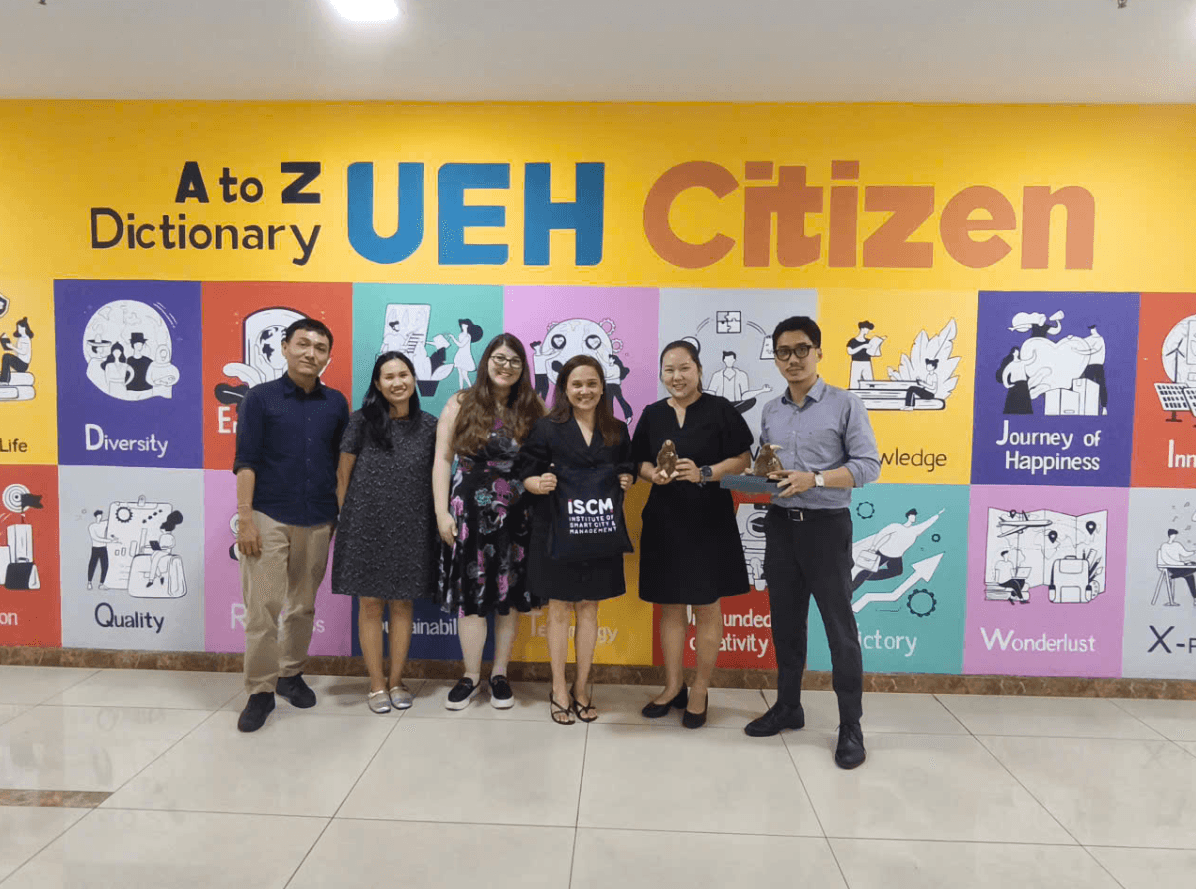
Meeting with representatives of the University of Auckland to discuss academic collaboration opportunities and scholarship prospects for ISCM students
In the area of education, ISCM has been actively expanding its partner network to enhance academic quality and strengthen the international dimension of its programs. During its meeting with the University of Auckland, both sides not only continued discussions on academic cooperation and student exchange opportunities, but also explored potential collaboration in emerging fields, particularly smart mobility and sustainable development. This marks an important continuation beyond the existing foundation of collaboration through the dual degree pathway associated with the Bachelor of Architectural and Urban Design Inclusive Smart City (BAUD), while also opening up new possibilities for the Bachelor of Smart Mobility and Operations Management (BMOM). The discussion also suggested further opportunities for scholarships and financial support for ISCM students wishing to pursue study in New Zealand.
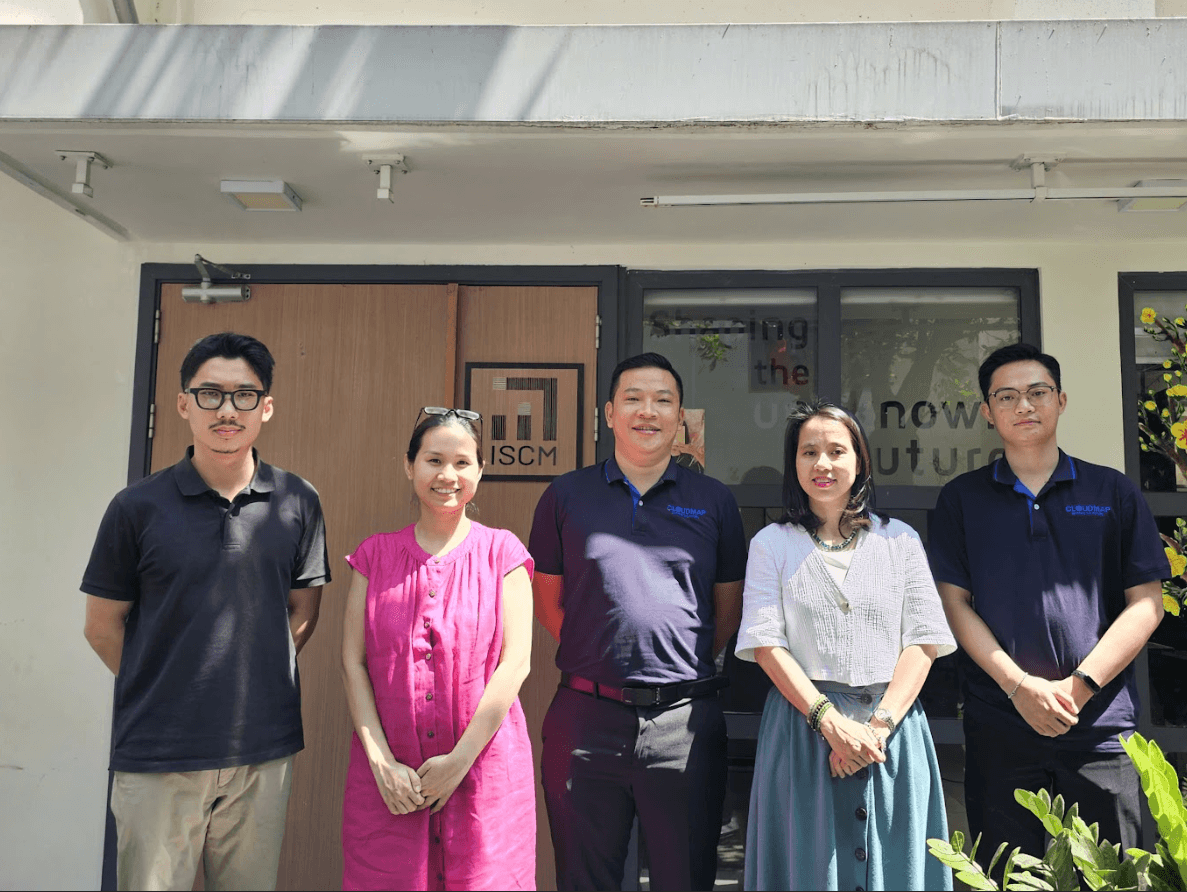
Meeting with Cloudmap on GIS applications for smart city design and development
Meetings with Cloudmap and international expert Dr. Krupa Rajangam further reflected ISCM’s direction of bringing experts, industry, and real-world practice closer to its academic programs. With Cloudmap, the two sides discussed the possibility of industry participation in ISCM’s teaching and research model through guest lecturing, thematic sharing on GIS, the development of an urban simulation lab, and opportunities for students to engage in practical activities and real-world projects. With Dr. Krupa Rajangam, collaboration was also expanded to include workshops, joint research, and community-based activities. Together, these connections create stronger conditions for ISCM’s programs to become more practice-oriented, interdisciplinary, and international.
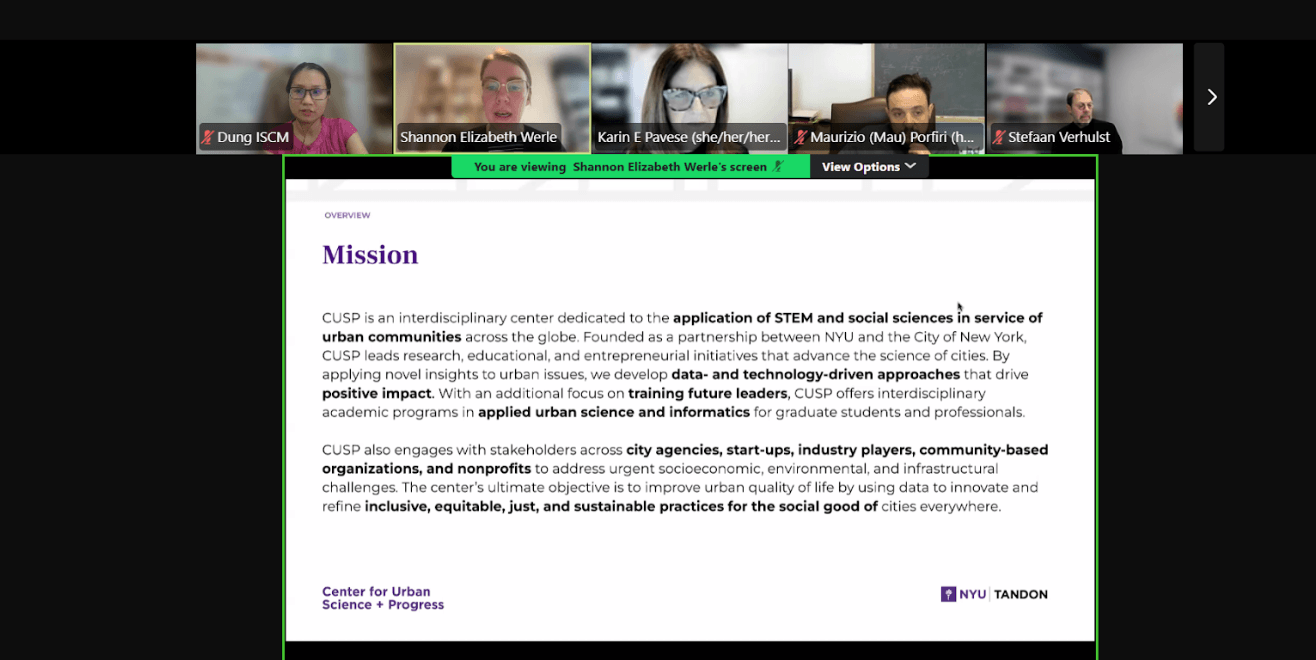
Meeting with the Center for Urban Science + Progress (New York University) and GS E&C on potential smart city development initiatives in Nha Be
In research and project development, March also brought several notable signals. In discussions with GS E&C and CUSP at New York University, ISCM and its partners explored collaboration in smart city development, data governance, Living Labs, and pilot models in Vietnam, particularly in the Nha Be. A key point in these exchanges was ISCM’s emphasis that the challenge does not lie in technology alone, but also in governance, local needs, and the co-creation platform required among multiple stakeholders. This serves as an important foundation for developing research projects with real implementation potential, rather than remaining at the level of ideas.
Another highlight was the meeting with Ghost Analytics, which opened up prospects for collaboration in smart mobility and AI applications for transport management. Through this exchange, ISCM gained an additional opportunity to build connections toward the gradual development of a dedicated smart mobility lab, while also promoting joint research projects and pilot models in the near future. This direction is especially meaningful for BMOM, as the program requires more partners with technological capabilities and practical experience to support its training orientation in operating new transport systems and developing multimodal transportation.
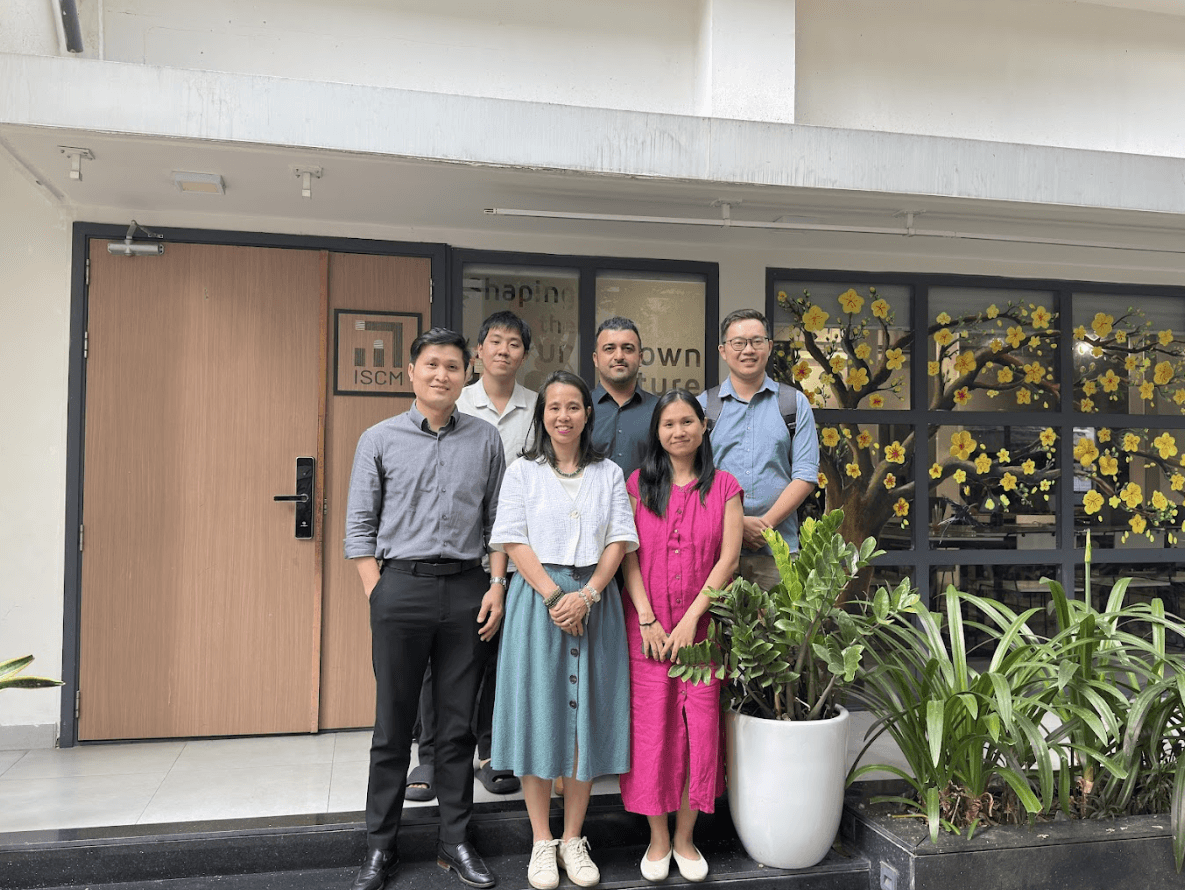
Meeting with Ghost Analytics on technology applications for smart mobility solutions
Notably, the meeting with RainLab demonstrated ISCM’s effort to expand its connections into new areas such as water management and technical solutions for experiential learning environments. This exchange also aligns with the goal of strengthening Living Lab models across UEH campuses, supporting hands-on learning, knowledge transfer, and gradually contributing to the university’s green and sustainable development orientation. At the same time, it reflects ISCM’s proactive search for experts in new and interdisciplinary fields that can generate lasting value for learners and local communities.
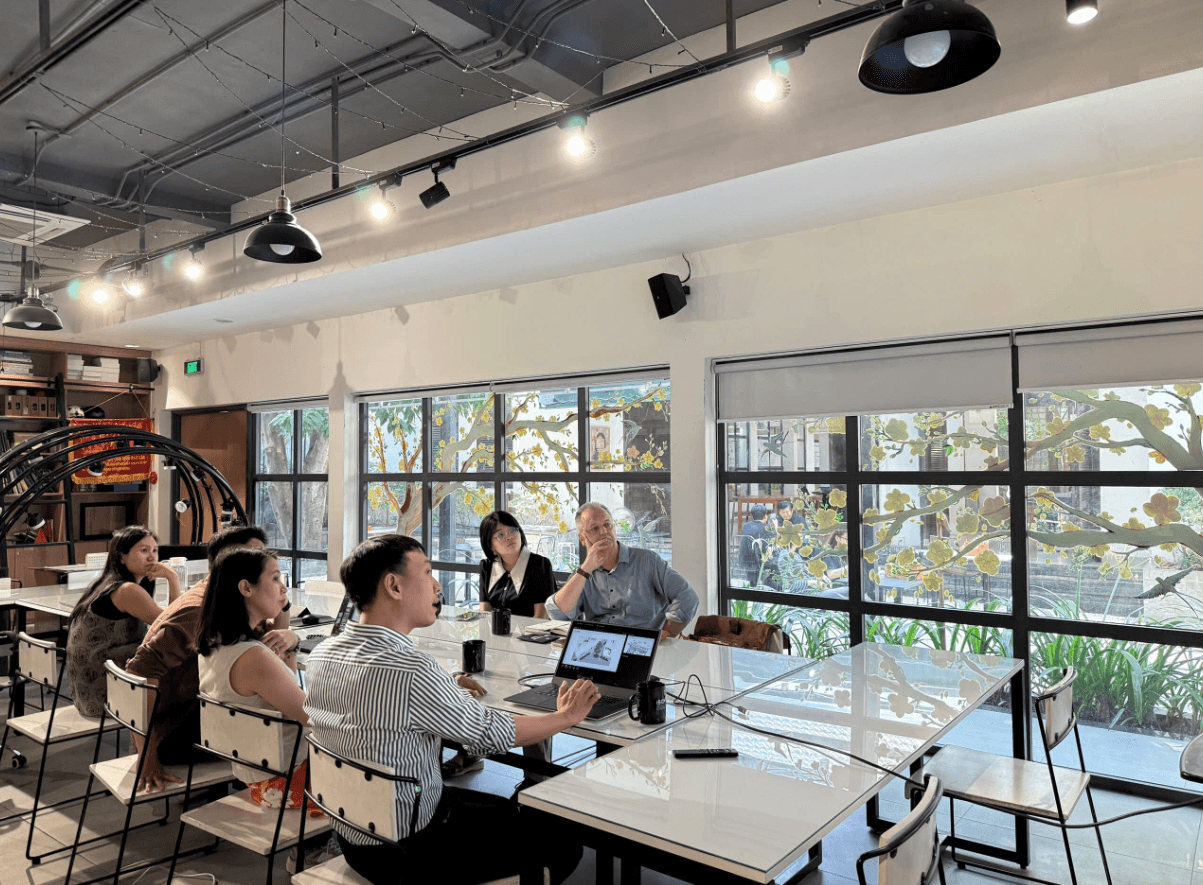
Meeting with Rainlab on potential solutions for water resource management
In addition to engaging with academic institutions, businesses, and scholars, ISCM also proactively worked with international development stakeholders, as seen in its meeting with representatives from the World Bank. This discussion brought forward important suggestions for ISCM, including approaches to funding access, opportunities to connect with development partners, collaboration prospects with localities in Ho Chi Minh City and the Mekong Delta, as well as the need to build projects based on real needs, scalability, and long-term impact. These exchanges further clarify ISCM’s role as a university-based institute that not only focuses on education and research, but also works alongside localities and communities in addressing practical challenges.
Through this series of meetings in March, ISCM has continued to expand its network across academia, industry, and the community. Beyond opening up new collaboration opportunities, these exchanges are also helping shape new directions for academic programs, joint research projects, and the learning experience of ISCM students in the time ahead.
News and Images: Institute of Smart City and Management