
[RECAP] Seminar on “Developing Ho Chi Minh City’s Urban Railway System for a New Era: Opportunities and Challenges”


On the morning of July 5, 2026, the Institute of Smart City and Management (ISCM), College of Technology and Design (CTD), University of Economics Ho Chi Minh City (UEH) successfully hosted the CTD Learning and Sharing 2026 seminar entitled "Developing Ho Chi Minh City’s Urban Railway System for a New Era: Opportunities and Challenges." Held in an online format, the event attracted 251 participants, including experts, academics, researchers, professionals, and students interested in urban planning, public transportation, and sustainable urban development.
The seminar featured Associate Professor Dr. Nguyen Quoc Hien, Deputy Head of the Management Authority for Urban Railways (MAUR), who has been directly involved in managing and implementing Metro Line No. 1 (Ben Thanh – Suoi Tien). Drawing upon his extensive practical experience from Vietnam’s first urban railway project, Dr. Hien shared valuable insights into the strategic development of Ho Chi Minh City's metro system in the next phase of urban transformation.
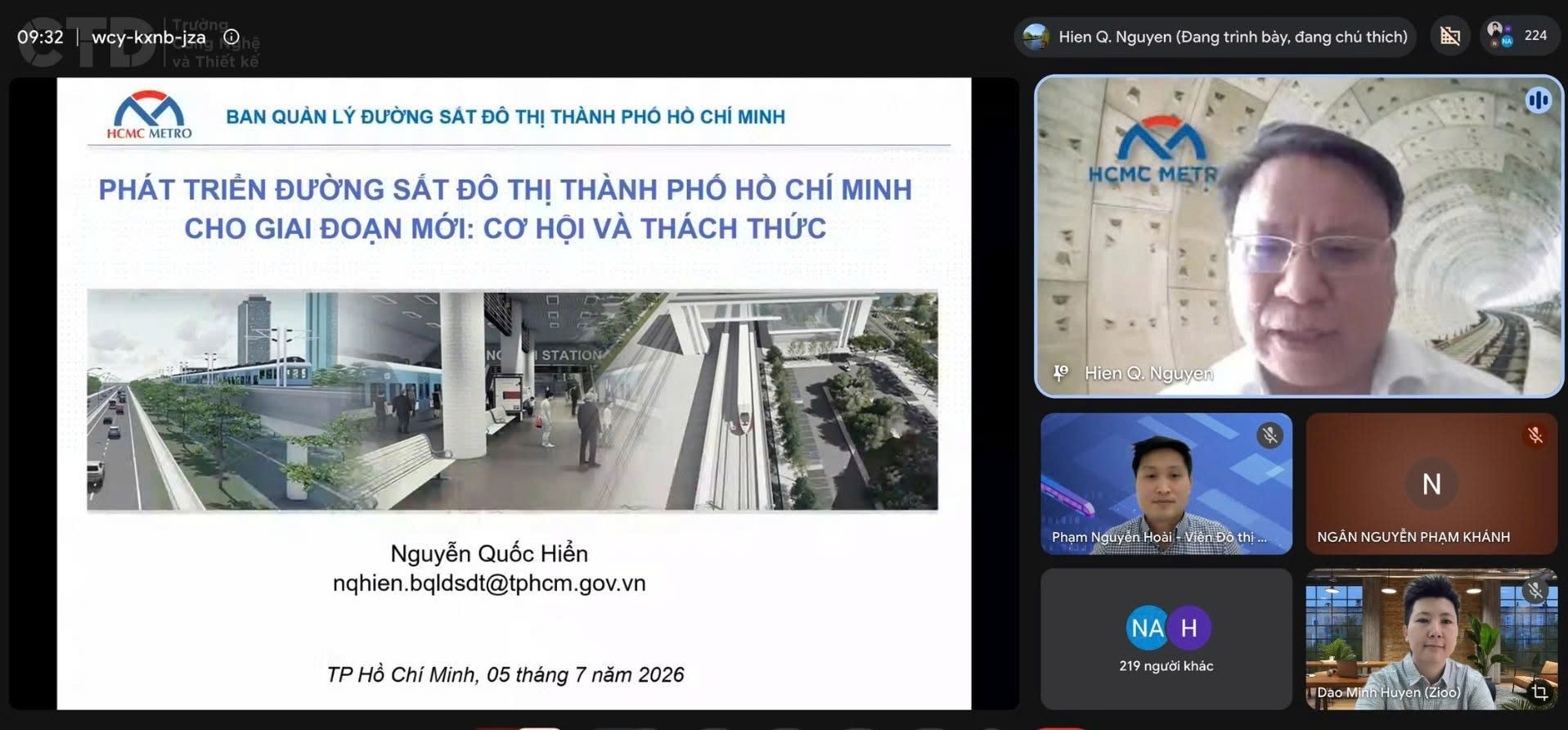
The seminar began with an in-depth discussion of the key lessons learned from the implementation of Metro Line No. 1. The speaker reflected on various aspects of the project, including investment preparation, project management, stakeholder coordination, as well as institutional, technical, and financial challenges encountered throughout the development process. These experiences provide important references for accelerating the implementation of subsequent metro lines as Ho Chi Minh City moves toward its ambitious goal of developing a comprehensive urban railway network by 2035–2045.
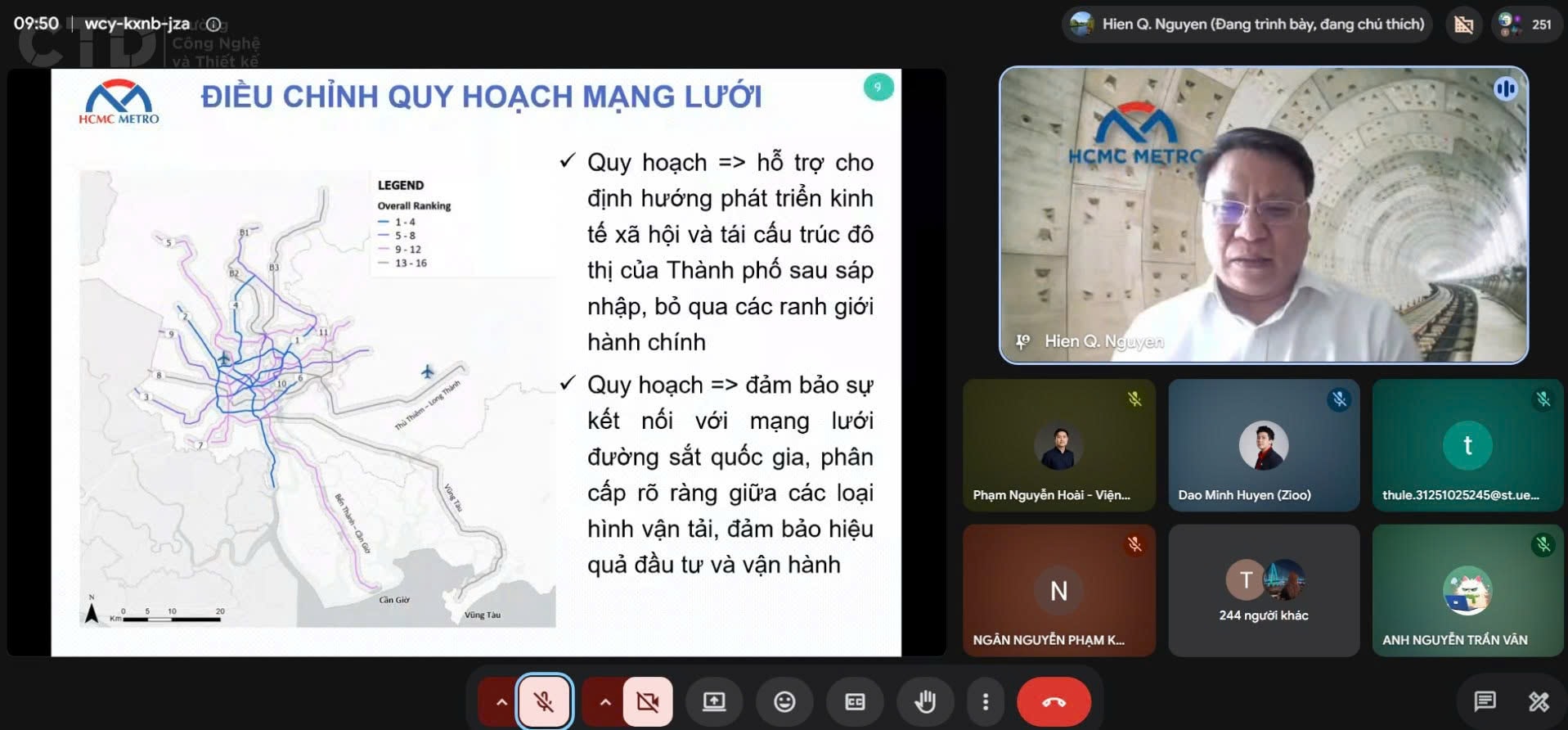
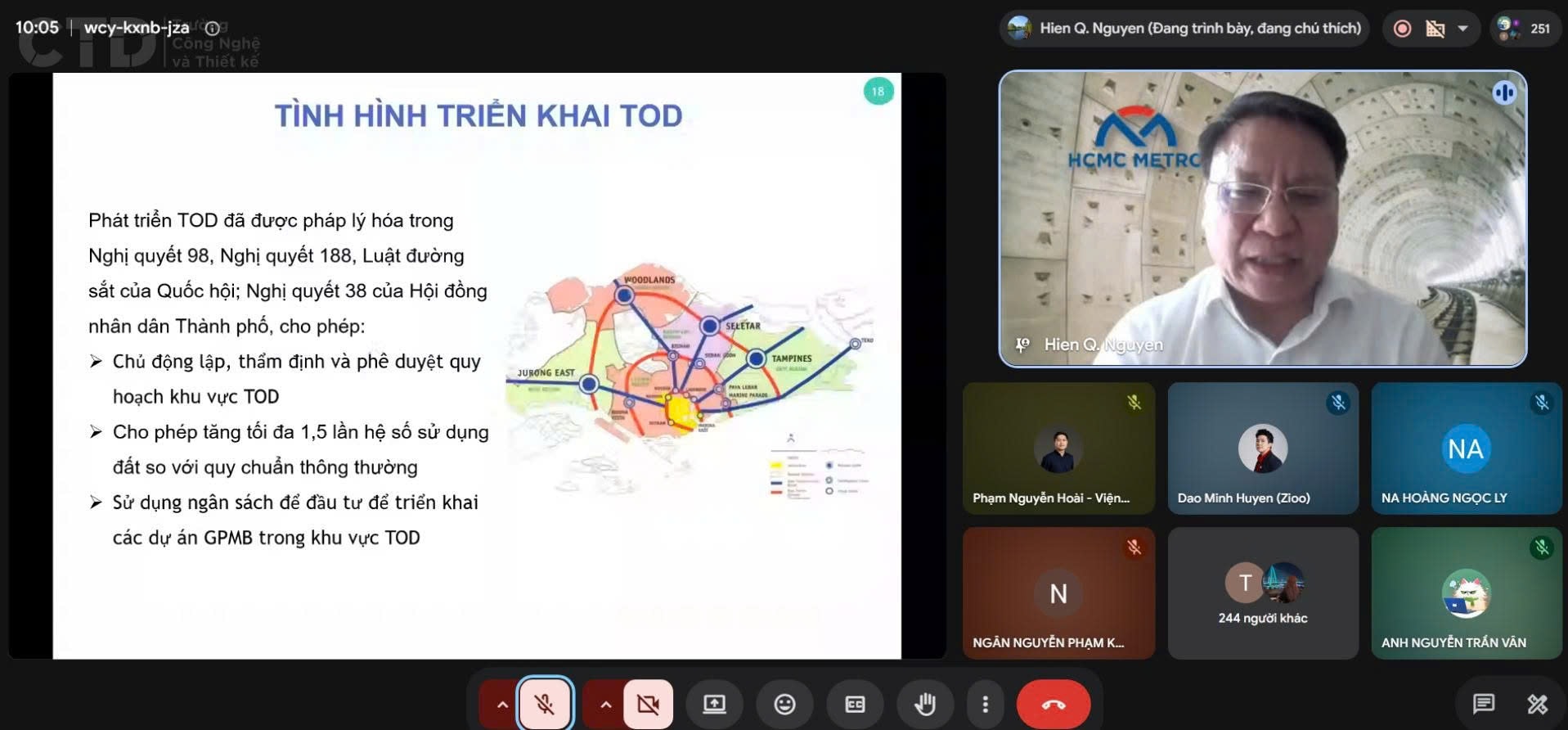
Beyond metro development strategies, considerable attention was devoted to the role of Transit-Oriented Development (TOD) in reshaping the city's urban structure. According to the speaker, the successful implementation of TOD requires continued improvements in institutional frameworks, stronger coordination among different levels of government, and more effective policies on land-use planning, urban development, and value capture from transport infrastructure investments. He also discussed several key criteria that should guide investment prioritization, including travel demand, the potential to stimulate TOD, and the economic and financial performance of individual railway corridors.
In light of rapid digital transformation, the seminar further explored emerging technologies that are expected to shape the future of urban rail systems. These include Artificial Intelligence (AI), Digital Twins, Big Data, automation technologies, and Mobility as a Service (MaaS). Integrating metro services with buses, public bicycle systems, shared electric vehicles, and digital mobility platforms was highlighted as a critical strategy for building an intelligent transportation ecosystem that delivers seamless, convenient, and citizen-centered mobility services.
The discussion session attracted numerous questions from participants, particularly regarding human resource development for the rapidly evolving railway sector. Dr. Hien emphasized that future labor markets will require professionals with interdisciplinary competencies spanning operations management, data analytics, system optimization, transport planning, digital technologies, and infrastructure management.
As one of the experts involved in reviewing the curriculum of the Bachelor of Smart Mobility and Operations Management (BMOM) program, which will be offered by the Institute of Smart City and Management (ISCM), University of Economics Ho Chi Minh City (UEH), Dr. Hien highly commended UEH-ISCM's educational vision. He noted that the BMOM program is well positioned to prepare the next generation of professionals for future intelligent mobility and operational systems by combining strong foundations in operations management and system optimization with competencies in data analytics, digital technologies, and evidence-based decision-making. According to him, the program has significant potential to contribute to developing the high-quality workforce needed to support Vietnam's modernization of smart transportation, logistics, urban railways, and infrastructure systems.
The seminar concluded with the speaker sharing his vision for Ho Chi Minh City by 2045, in which the urban railway network will serve as the backbone of public transportation, connecting key urban centers, promoting TOD-based urban development, reducing traffic congestion and carbon emissions, and ultimately improving citizens' quality of life. He also encouraged younger generations to proactively develop interdisciplinary knowledge, innovative thinking, and technological capabilities in order to become key contributors to building smarter, more sustainable cities in the future.