
INTERNATIONAL WORKSHOP "MANGROVE HORIZONS" - A JOURNEY OF SPATIAL DATA INTEGRATION AND CO-CREATION WITH LOCAL COMMUNITIES


Facing existential challenges from climate change and the severe degradation of coastal ecosystems, the Mekong Delta requires sustainable green-blue infrastructure restoration solutions that go beyond theoretical blueprints. Reaffirming its commitment to fostering sustainable development, University of Economics Ho Chi Minh City (UEH), Institute of Smart City and Management (ISCM), Women4Mangrove Initiative (W4M), and University of Zurich (UZH) successfully organized the International Workshop and Field Survey "Mangrove Horizons". The event established an outstanding interdisciplinary dialogue platform where spatial technology, indigenous knowledge, and community voices converged.
Inheriting the philosophy of "Global Thinking - Local Action" (Glocal) and the spirit of innovation, Mangrove Horizons is not merely a traditional academic conference. It is a multi-dimensional dialogue ecosystem that thoroughly applies practice-based research methods through the Living Lab model.
The event created an unprecedented opportunity for researchers, experts, local authorities, and especially indigenous communities to sit down together and completely dismantle academic barriers. The core objective is to translate complex remote sensing data analysis, ecosystem restoration ideas, and human-centered thinking into effective models.
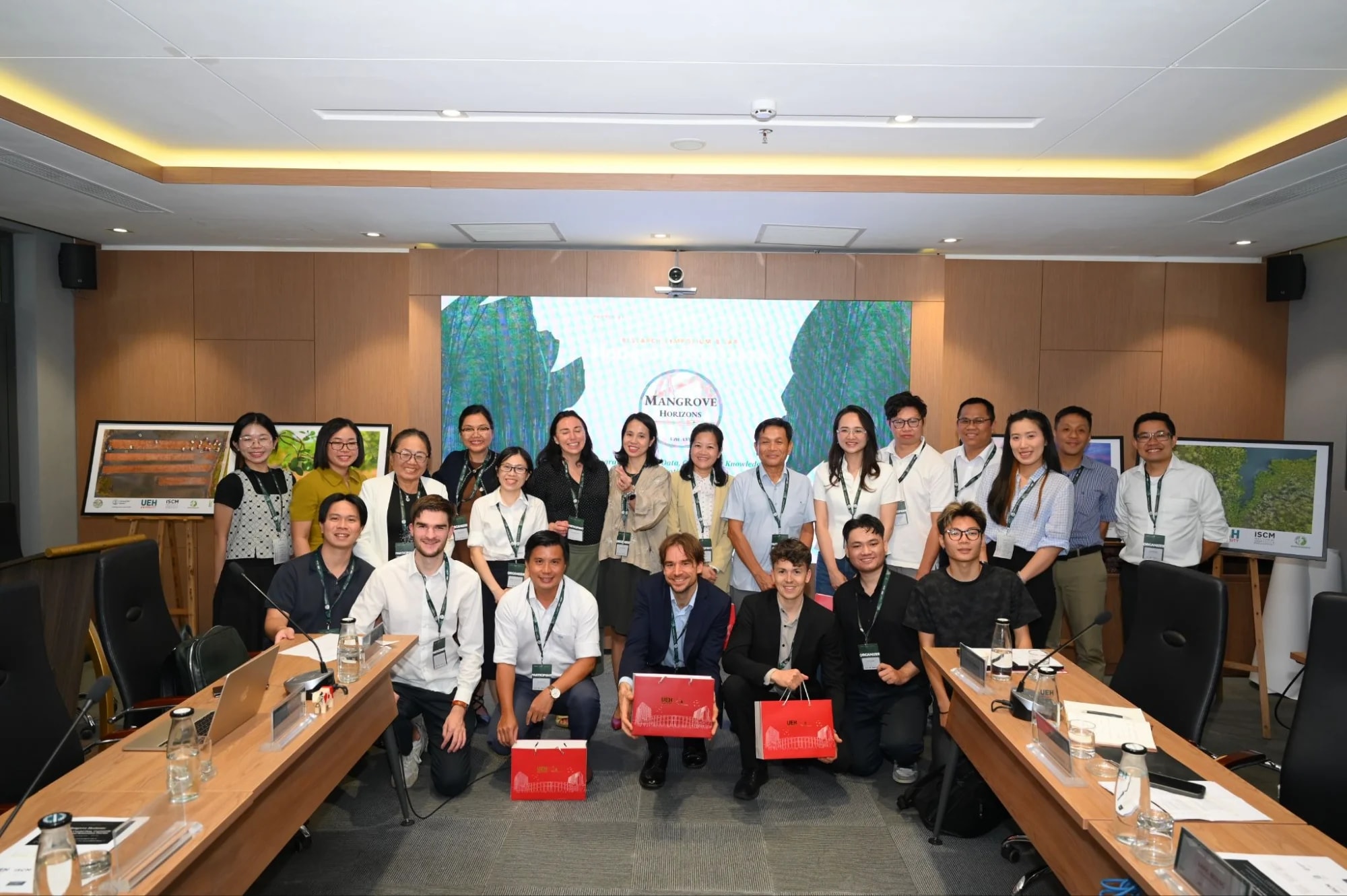
Unlocking Digital Data, Policy Dialogue, and Artistic Empathy
The journey to build coastal resilience originated with the International Symposium held at Campus B (UEH). Experts and scientists dissected the multi-dimensional picture of the coastal region through the unique intersection of "Hi-Tech and Hi-Touch" - where technology visualizes eco-hydrology through remote sensing alongside the intrinsic strength of women protecting the forests. Following opening remarks from representatives of UEH and UZH, the symposium officially entered its agenda with a strategic vision keynote on the Mekong Delta Living Lab Model by Dr. Phan Manh Hung.
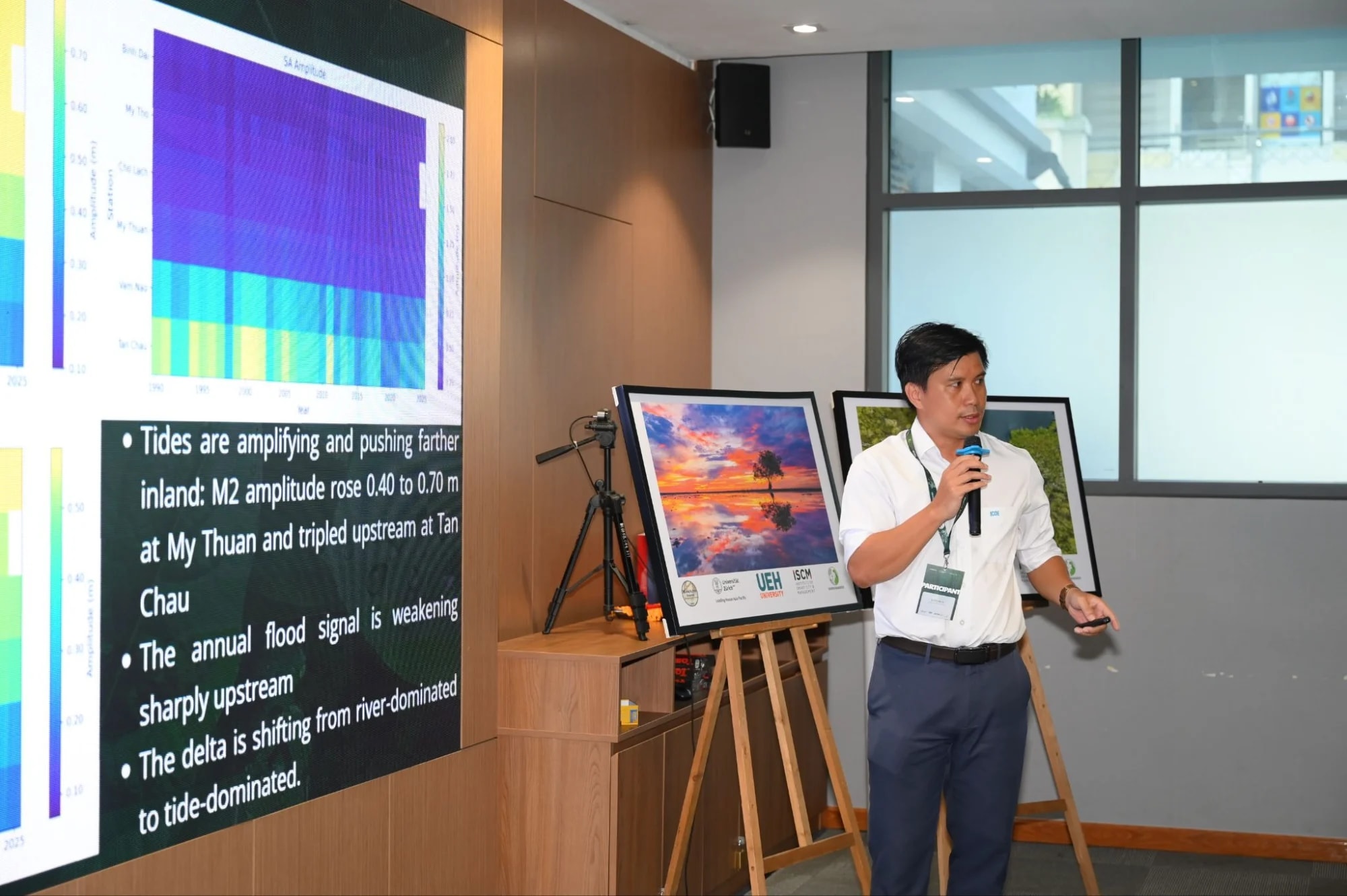
The network of experts and scientists dissected the multi-dimensional picture of the coastal region through 3 core thematic sessions:
Theme 1 (Hi-Tech vs. Hi-Touch): The symbolic convergence between satellite eco-hydrological visualization technology and the intrinsic strength, resilience of women forest guardians through the "Strong Roots, Strong Women" project.
Theme 2 (Livelihood Models in Restoration): Deep diving into restoration economics, social innovation through community learning tourism networks, and nature-based solutions integrating mangrove ecosystems into sustainable aquaculture.
Theme 3 (The Future of Mangroves): Presenting ecological and physical estuarine simulations under the fierce pressures of sea-level rise and anthropogenic impacts.
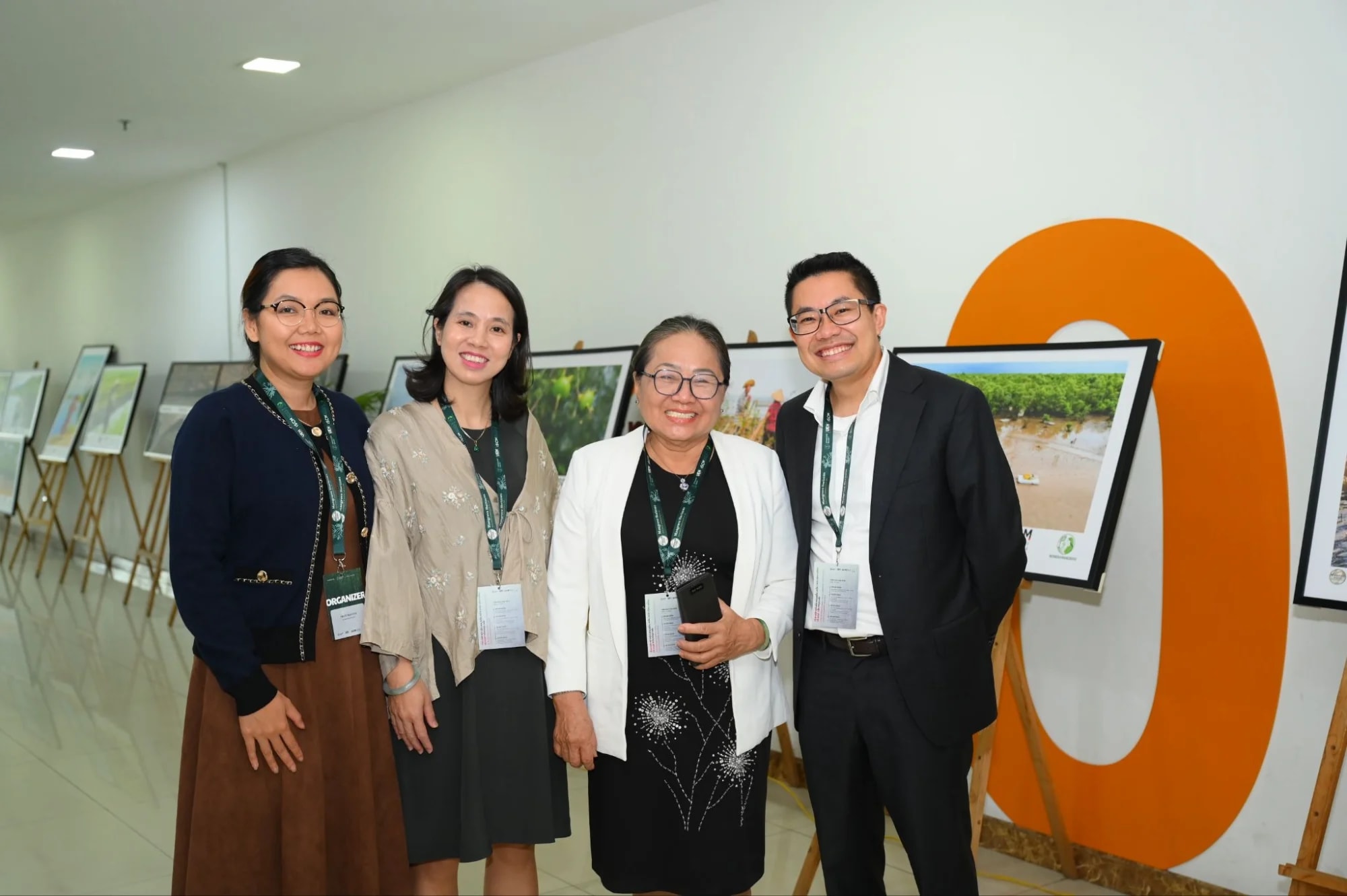
Additionally, the Policy Dialogue session created a bridge to discuss mechanisms for translating science into practical conservation action. Alongside the academic exchanges, the "Mangrove Photo Exhibition" offered an evocative artistic perspective. More than just frames, the exhibition was a visual song guiding viewers through the lifecycle of a seedling – from taking root in the muddy soil, rising above tidal currents, to becoming a sturdy livelihood anchor in the working delta.
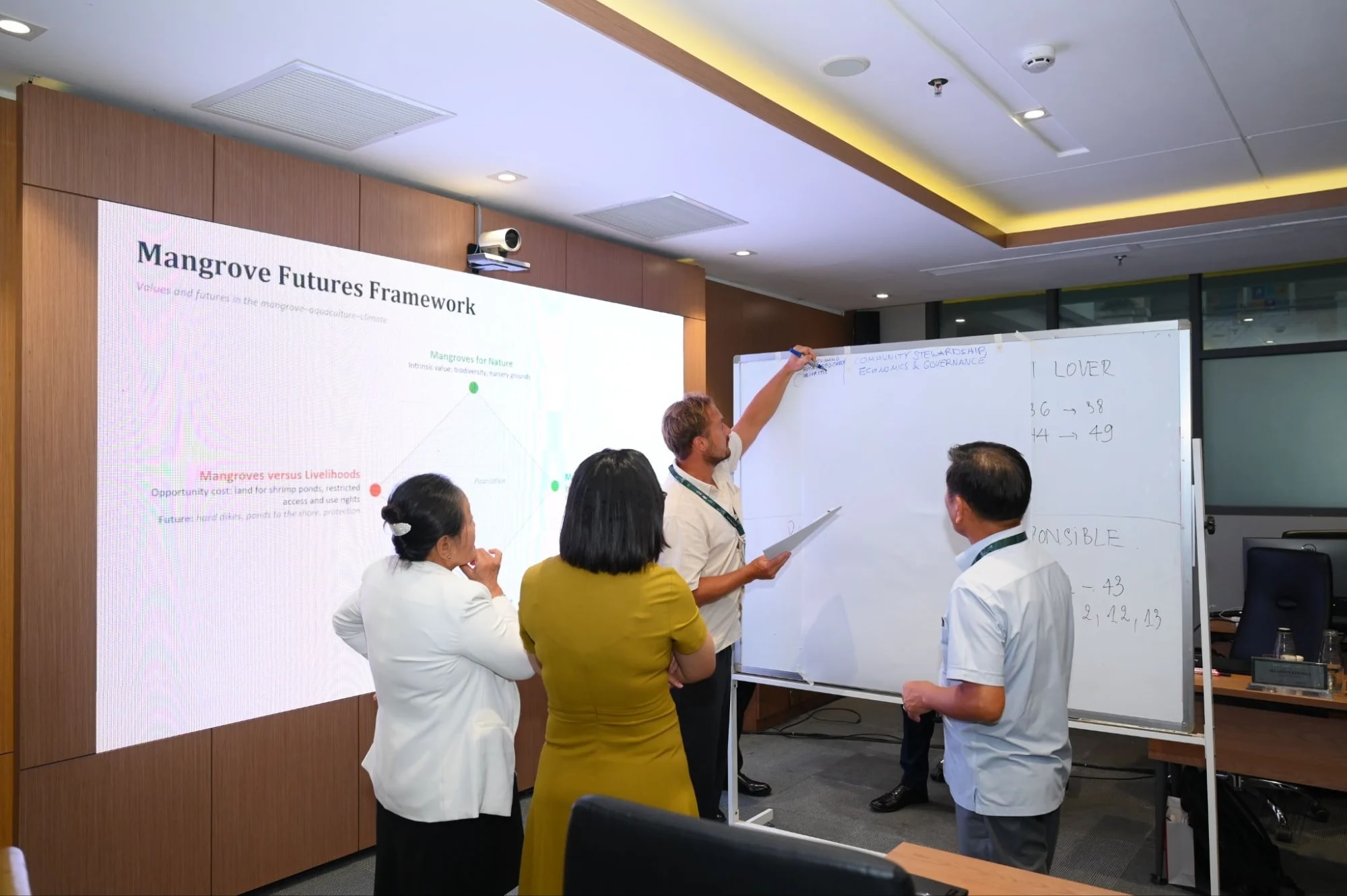
Moving from foundational theories, a highlight of the academic symposium series was the "World Café" space. Here, speakers, experts, policymakers, and community organizers came together to "co-create" around five strategic research pillars: (1) Coastal Vulnerability & Climate Adaptation, (2) Restoration Ecology & Biodiversity, (3) Community Governance & Economics, (4) Environmental Education & Citizen Science, and (5) Data Sharing & Future Funding Sources.
Cultural Exchange and Empirical Action with the Community
Shifting from the academic arena to a practice-based approach, the international network of experts headed south through Soc Trang to enter the Living Lab in Cu Lao Dung. The organizing committee collaborated with Co Hai Homestay (Cu Lao Dung) to host an outdoor "Mangrove Photo Exhibition" to bring art closer to the local community.
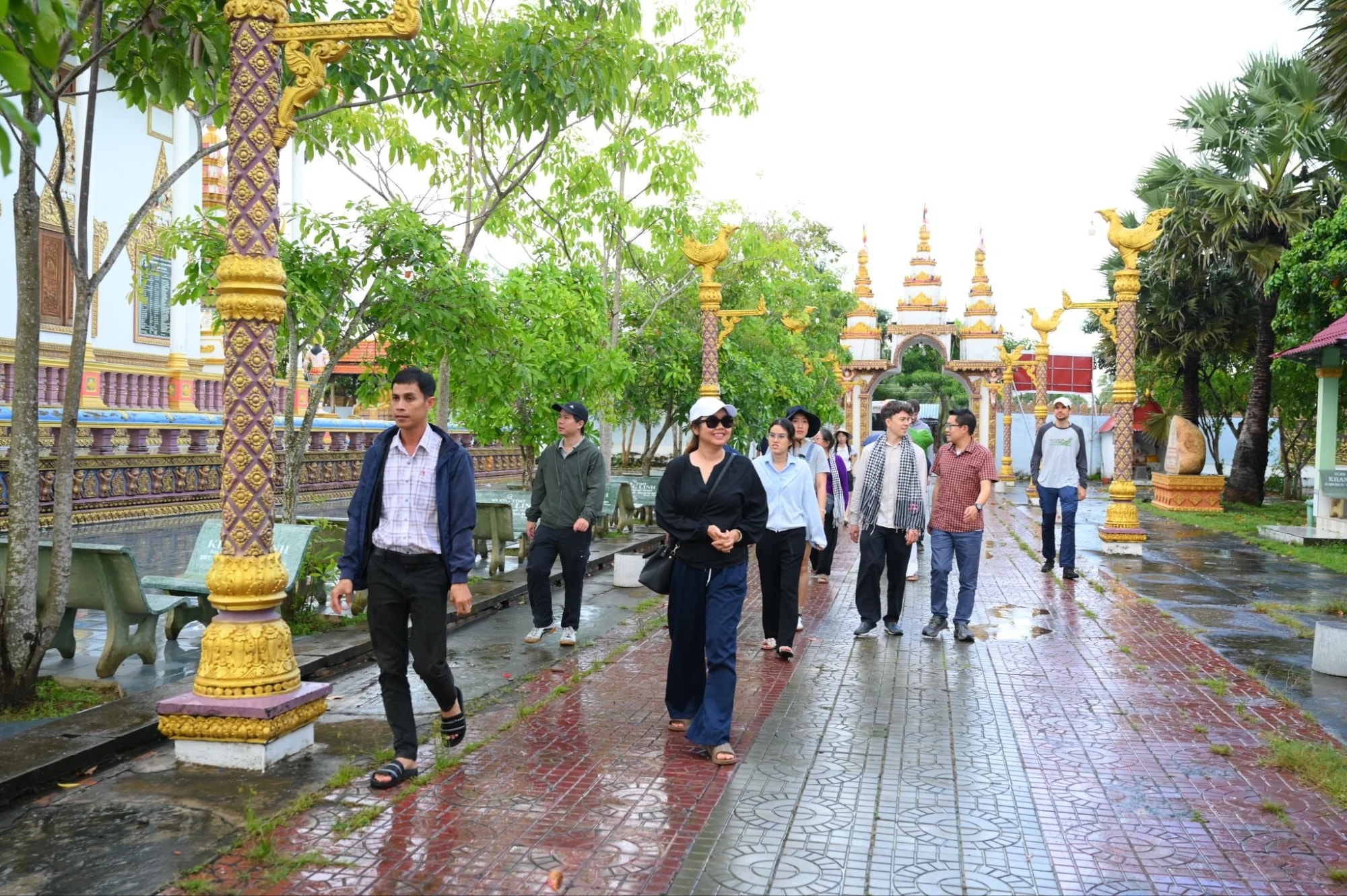
The process of understanding local context began with a visit to Kos Tung Khmer Pagoda. Here, international delegates immersed themselves in the religious belief, architecture, and spiritual life of the local inhabitants.
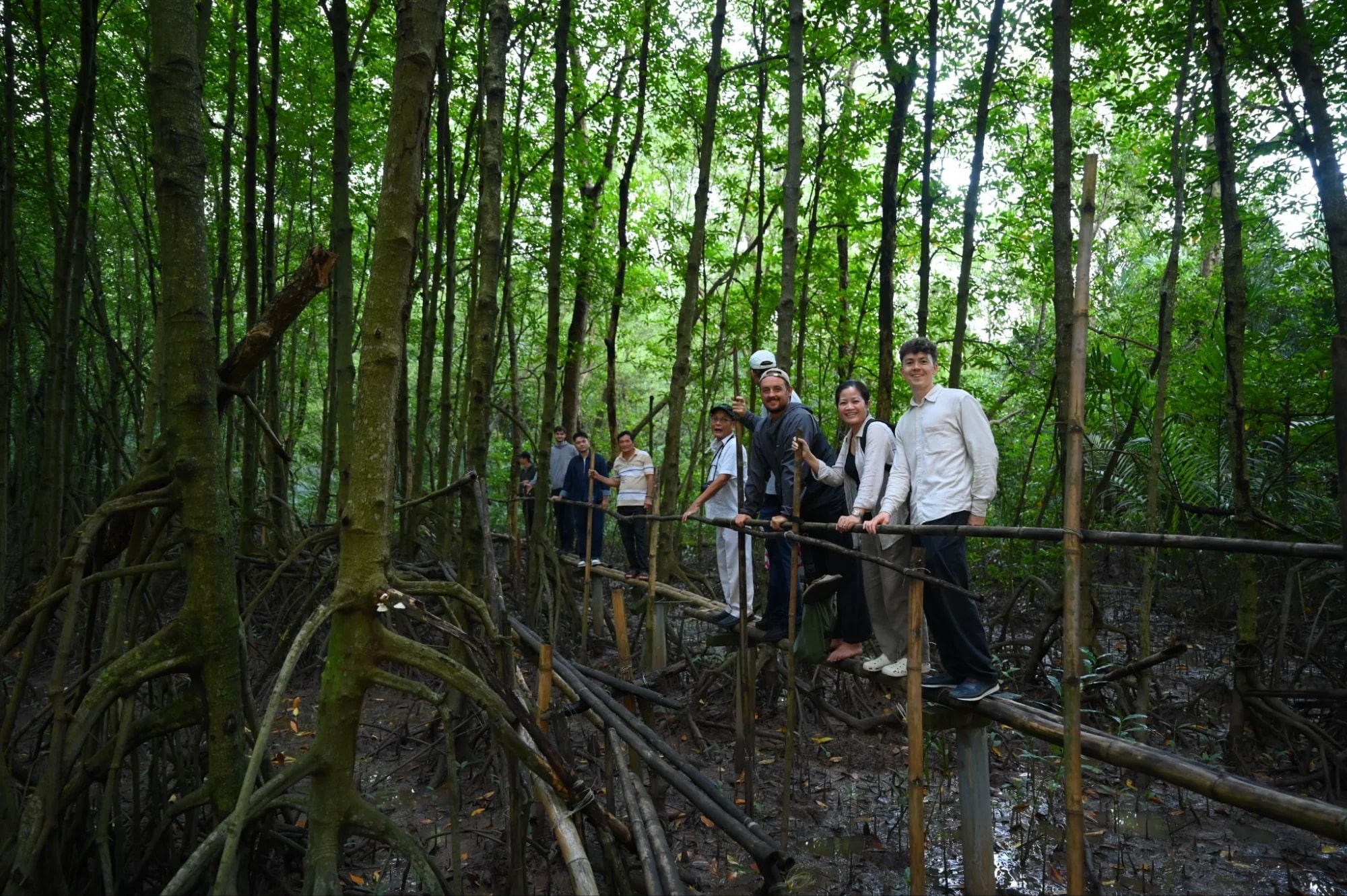
The empirical journey continued with a mangrove field visit. Navigating by boat under tree canopies and balancing across bamboo bridges through shady forests, experts ventured into the core ecosystem. Beyond observing botanical and hydrological structures, the delegation experienced environmental education guided by local forest guardians.
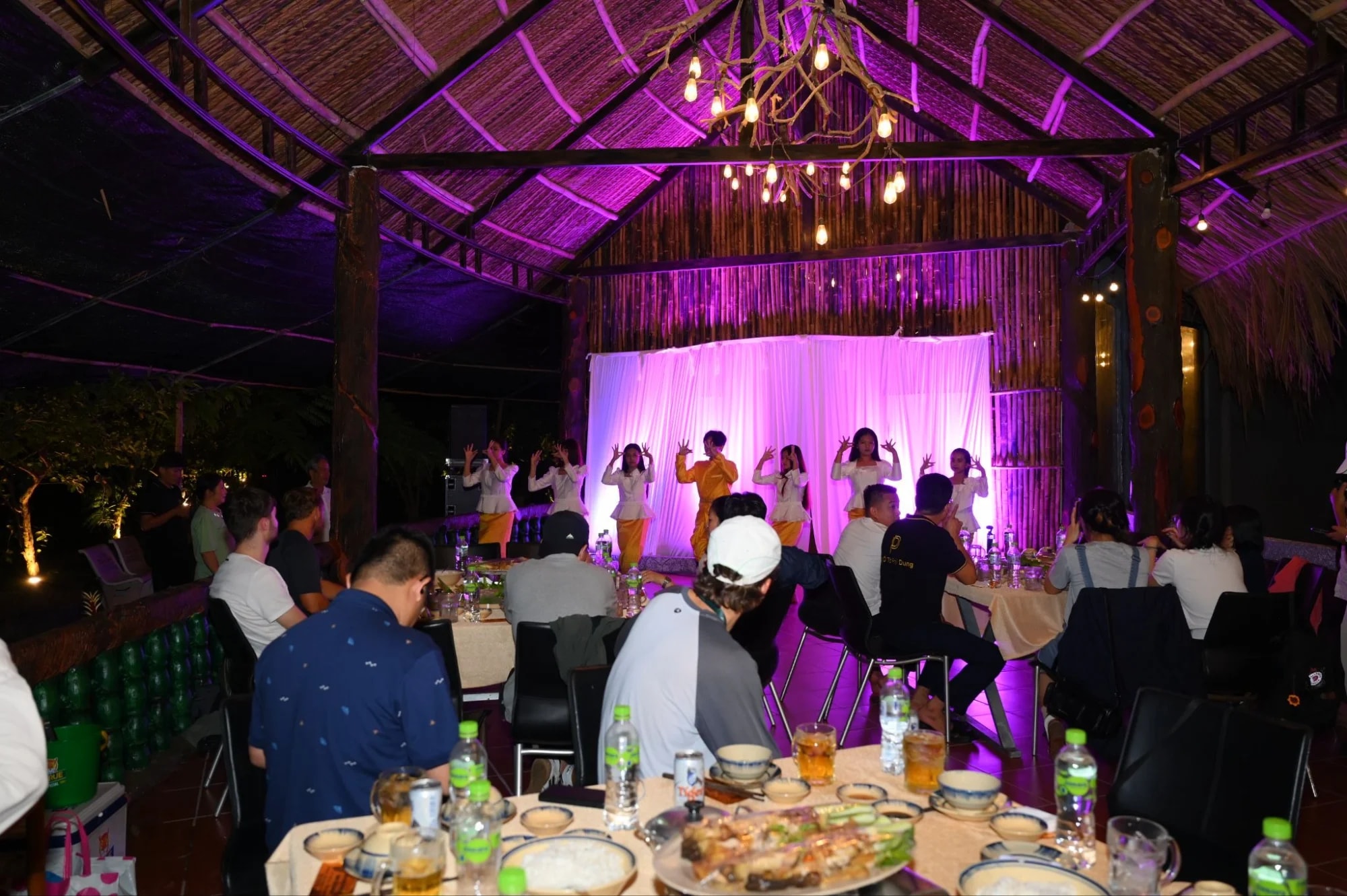
The connection to local cultural heritage deepened during an evening at Apsara Homestay. The dinner unfolded in a warm atmosphere as scientists, local authorities, and community members danced together to vibrant traditional Khmer music.
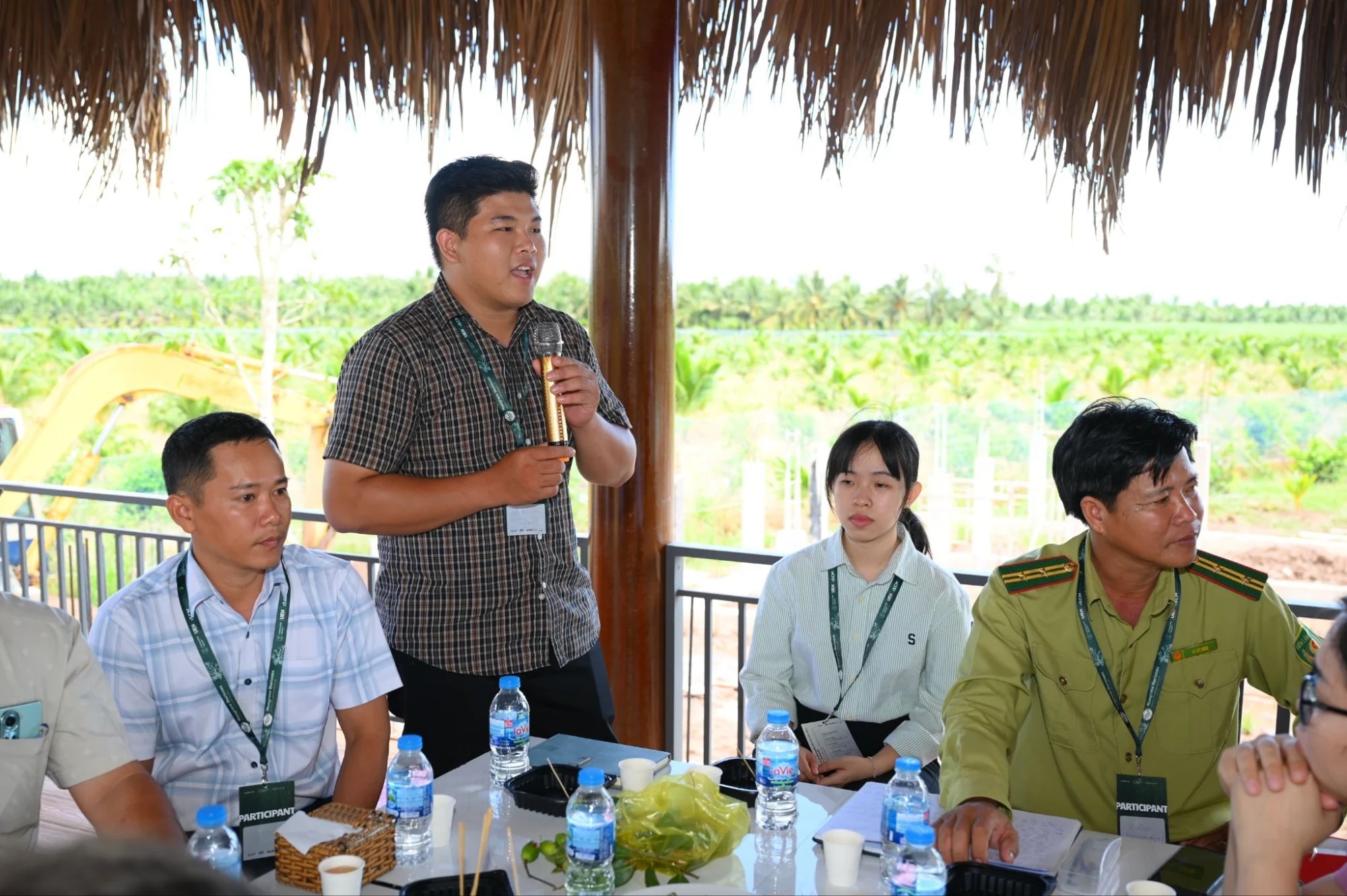
Shortly after, the Community Dialogue became a true space of empowerment. At the W4M Nursery and Community Center, boundaries between scientists and farmers vanished through interactive activities. The "Community Dialogue" session empowered local voices, where indigenous ecological knowledge and real livelihood pressures were directly shared by residents.
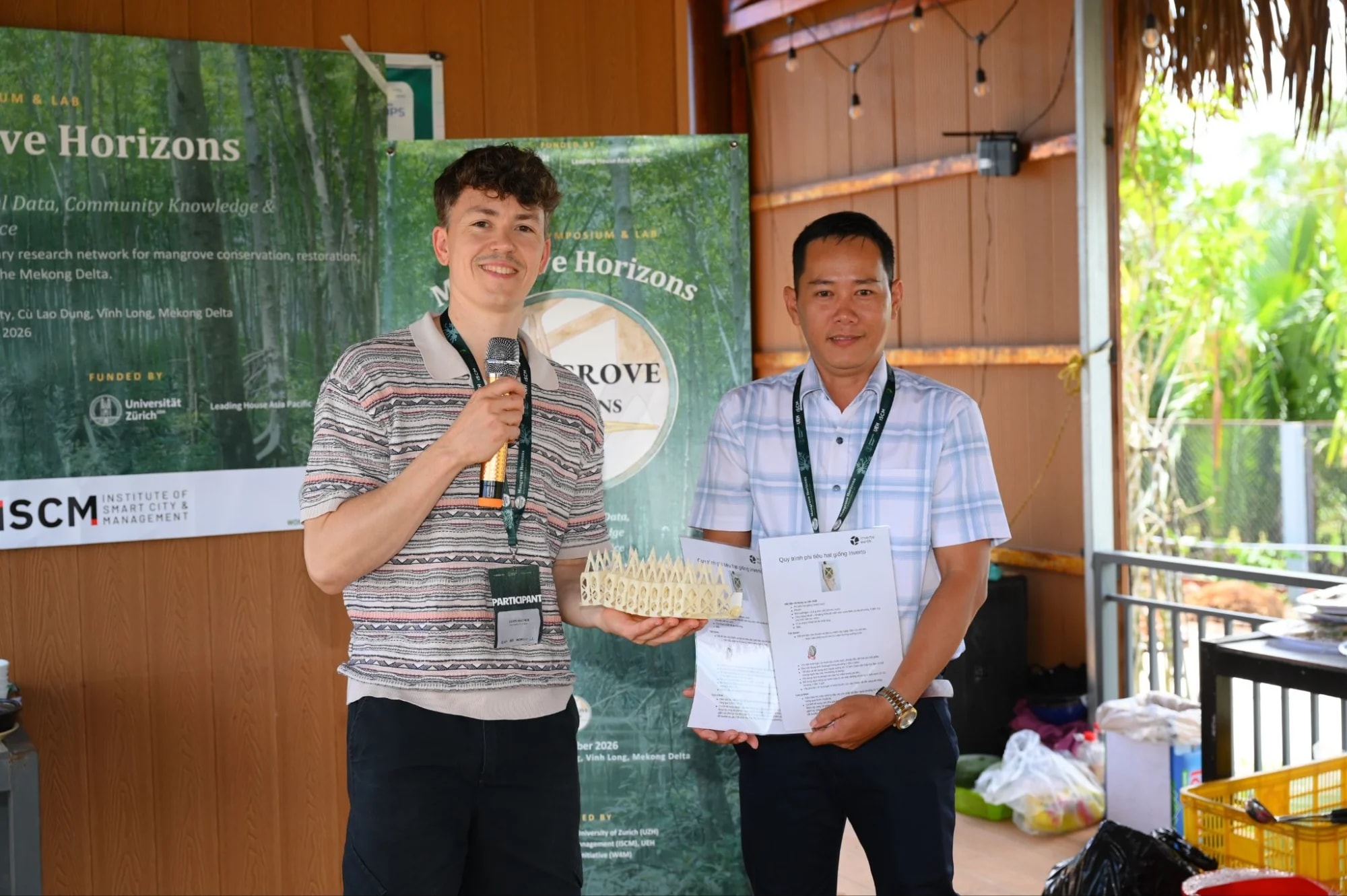
Notably, during this dialogue, Dr. Leon Hauser from University of Zurich (UZH) personally handed over a technological solution: biodegradable potato-peel seedling pots to the local community. This initiative aims to replace traditional plastic seedling bags, making mangrove reforestation efforts sustainable, plastic-free, and eco-friendly.
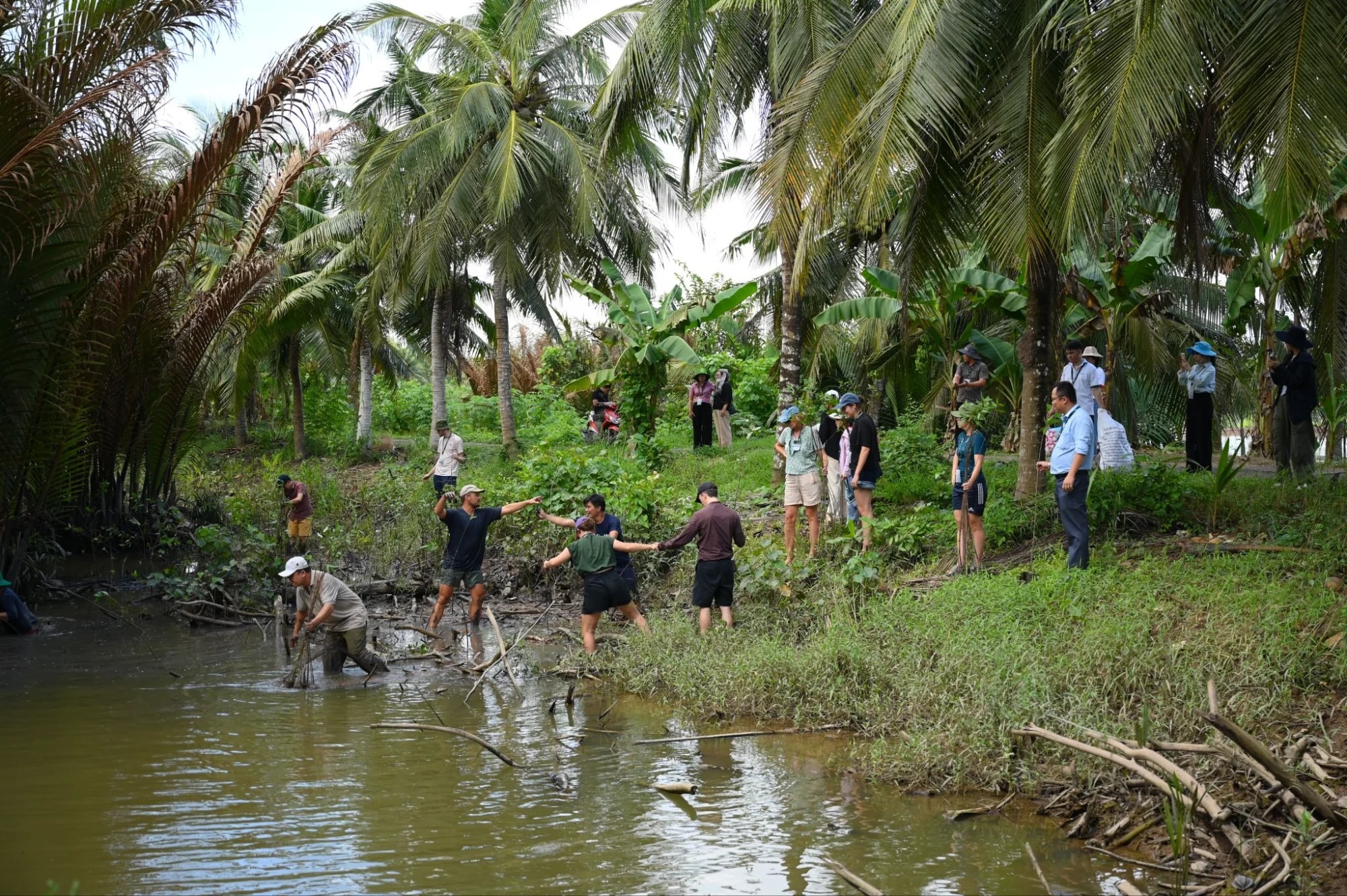
Responding to the call to action, international delegates stepped into the mud alongside local authorities and community members to plant mangrove trees, sowing seeds for future wave-breaking forests.
Consolidating Research Heritage and Charting Future Actions at UEH Mekong
Carrying vivid insights from field experiences, muddy steps, and handshakes with residents, the journey converged at UEH Mekong Campus (Vinh Long) to synthesize outcomes. The day began with presentations on the overview and directions of the Mekong Delta Living Lab Initiative from partners TU Delft, ICOE, TLU, and HUNRE.
Following a tour of the lobby exhibition space, an intensive Write-shop session coordinated by ISCM, W4M, and UZH focused on the five key drafted themes. Experts converted these into specific action research frameworks, outlining joint publication opportunities and addressing strategic funding goals to maintain a long-term Mangrove Conservation Network.
The "Mangrove Horizons" event marks a transition from theoretical mangrove ecosystem research into an interdisciplinary, connected, and resilient practice network. By combining modern digital spatial technology, adaptive landscape design, and deep, equitable community participation, UEH and its partners affirm their commitment to building resilient coastal areas toward a sustainable future.