
ISCM PROPOSES AN ADAPTIVE AND SMART PLANNING APPROACH FOR BINH HUNG URBAN DEVELOPMENT

On August 8, 2026, at the seminar “Urban Development Potential of Binh Hung Commune and Subdivision Planning Orientations in the New Development Context,” Dr. Hoang Ngoc Lan, representing the Governance and Planning Policy Lab (GPPL) at the Institute of Smart City and Management (ISCM), University of Economics Ho Chi Minh City (UEH), presented the paper “Adaptive Zoning Framework (AZF): Subdivision Planning Orientations for Binh Hung Commune in Ho Chi Minh City’s New Development Context.”
The presentation introduced a new planning approach for Binh Hung as the area faces multiple transformations simultaneously, including rapid urbanization, population growth, strategic transport corridors, transit-oriented development (TOD), digital transformation, and increasing pressures associated with climate change.
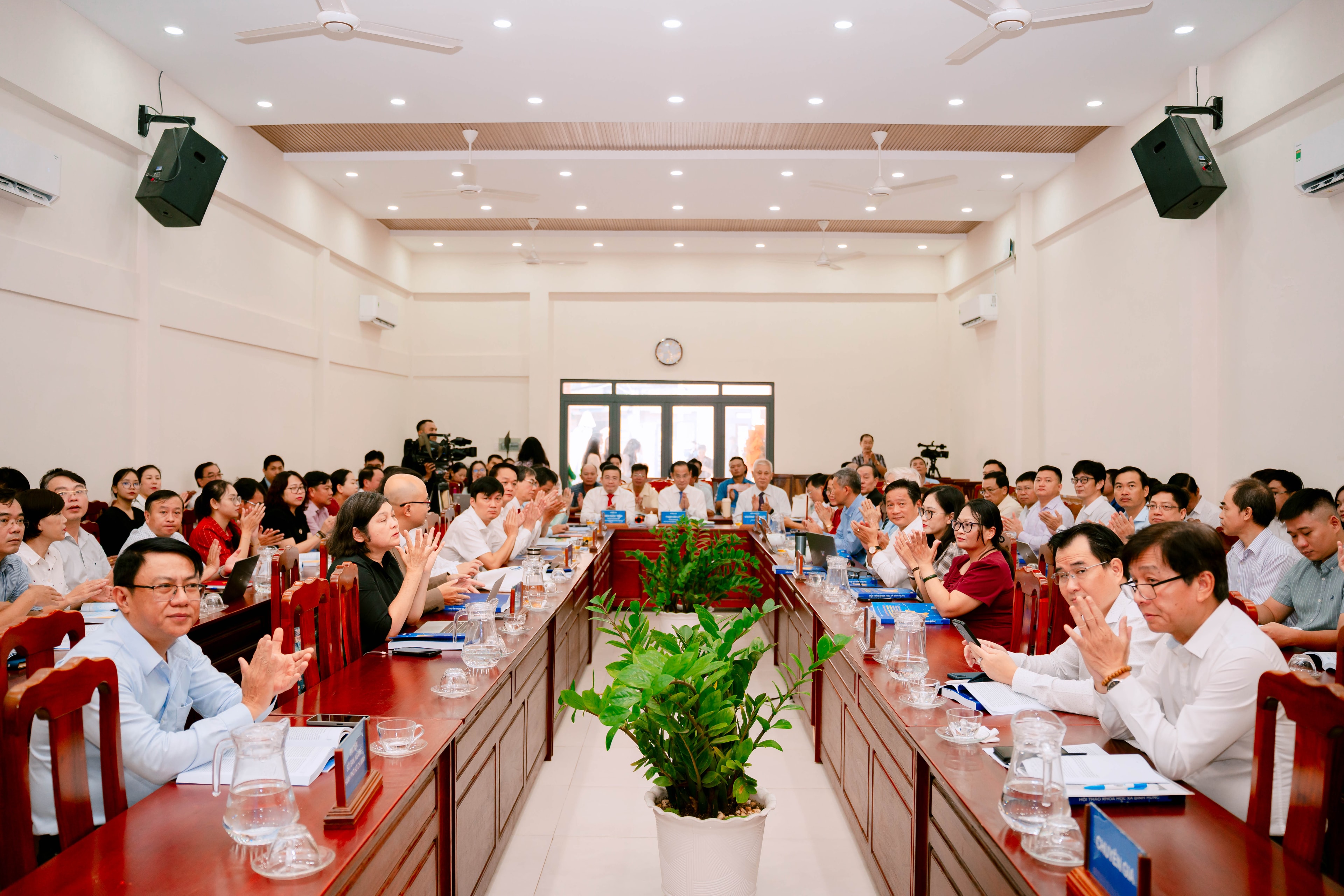
Overview of the seminar on Binh Hung’s urban development potential and subdivision planning orientations
From static planning towards an adaptive planning system
Conventional subdivision planning is generally developed around relatively fixed assumptions regarding land use, population, density, and urban functions. Yet as cities evolve more rapidly, these initial assumptions may increasingly diverge from actual changes in population, mobility, economic activities, environmental conditions, and community needs.
Against this background, ISCM proposed a transition from “static planning” to “adaptive planning.” Under this approach, planning is no longer considered a completed product established at a particular point in time. Instead, it becomes a system capable of monitoring, learning, updating, and adjusting in response to changing urban conditions and new data.
This approach is particularly relevant for Binh Hung, which is positioned at the southern gateway of Ho Chi Minh City and is influenced by several emerging development drivers. Rather than defining a rigid long-term land-use structure, planning should provide sufficient flexibility to respond to changes in mobility patterns, development demand, infrastructure networks, environmental conditions, and emerging urban development models.
Adaptive Zoning Framework: integrating space, data and technology
The proposed Adaptive Zoning Framework (AZF) incorporates several interconnected components: flexible spatial development structures; dynamic allocation of planning indicators; urban development associated with TOD and growth corridors; integration of green infrastructure and climate adaptation solutions; and the use of GIS, Digital Twin and artificial intelligence (AI) to support urban monitoring, management, and planning decision-making.
A central principle of this approach is that technology should not become an objective in itself. GIS, Digital Twin, and AI generate meaningful value only when embedded within a governance system capable of translating data into evidence for decision-making, monitoring urban transformation, and evaluating alternative development scenarios.
Digital Twin technologies, for example, may enable planners to build virtual representations of urban environments and test alternative scenarios before implementation. GIS provides an integrated spatial data environment, while AI offers new possibilities for identifying patterns, analysing complex datasets, and supporting urban forecasting.
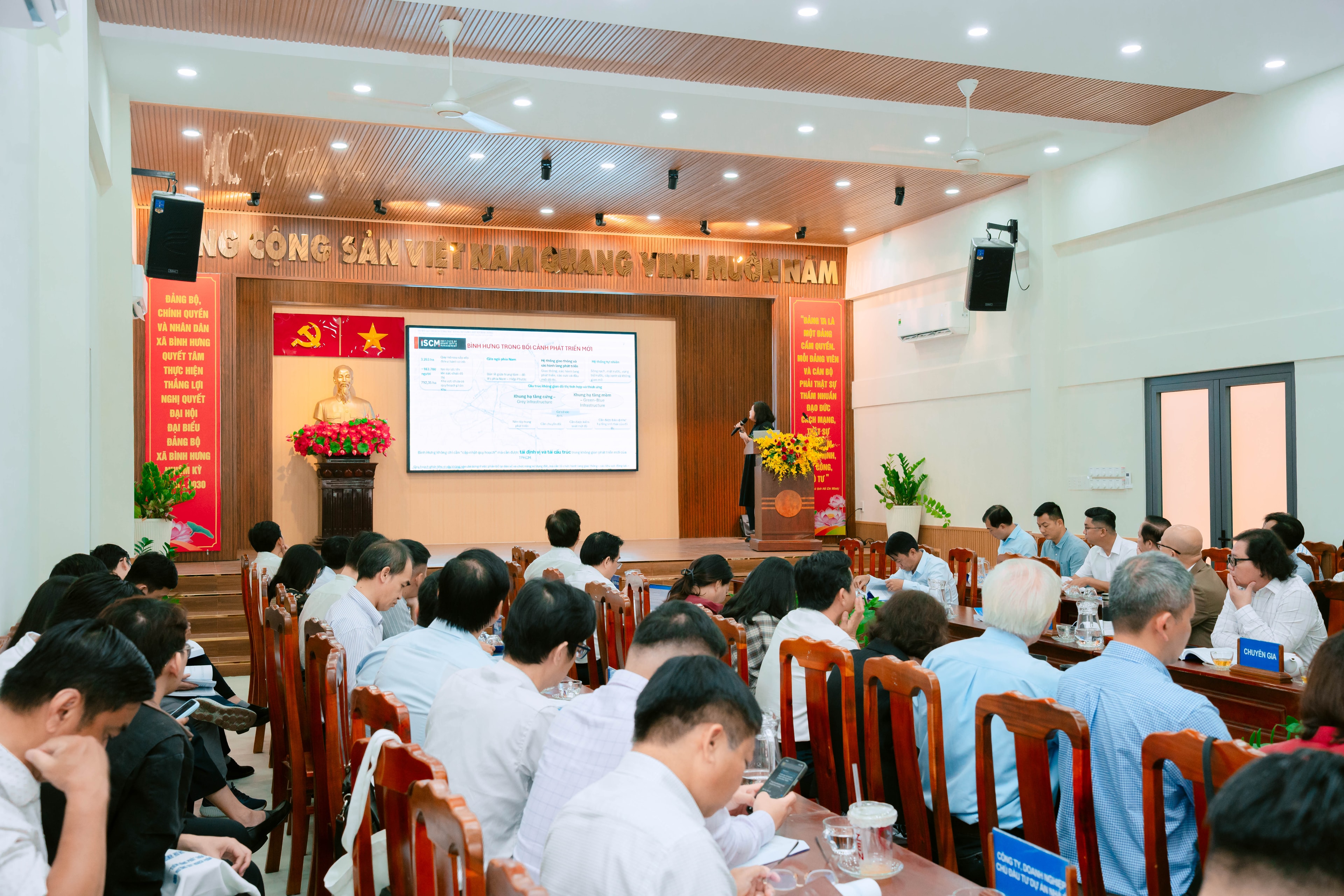
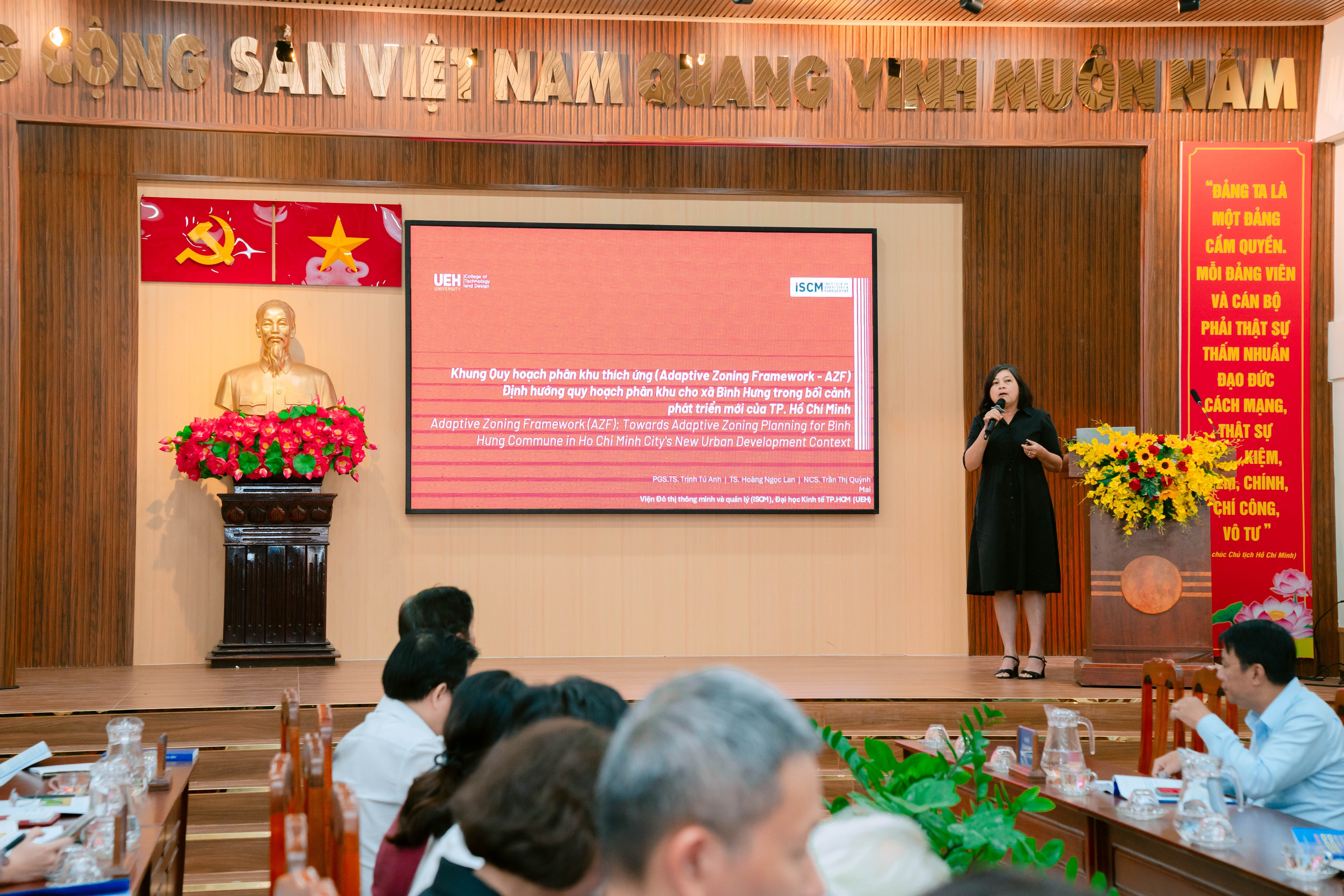
Dr. Hoang Ngoc Lan, representing the Governance and Planning Policy Lab at ISCM, presenting at the seminar
From Binh Hung to a broader planning approach for rapidly urbanizing areas
Beyond the specific case of Binh Hung, the presentation also raises a broader question for Ho Chi Minh City: as urban conditions become increasingly dynamic, can planning continue to rely primarily on forecasts and indicators fixed at a particular moment, or should it evolve into a more flexible and data-responsive system?
From this perspective, AZF is not merely a technical proposal for zoning. It represents a shift in planning governance — from managing a static plan towards managing a continuous process of urban transformation.
Such an approach also creates opportunities to connect domains that have traditionally been addressed separately, including spatial planning, transportation infrastructure, green infrastructure, digital transformation, and urban governance.
Advancing ISCM’s research agenda on smart and adaptive cities
ISCM’s participation in the seminar and the proposal of the Adaptive Zoning Framework reflect the Institute’s broader research direction in extending the concept of the Smart City beyond technology-centered approaches.
From ISCM’s perspective, a smart city requires the integration of space, technology, and governance, with technology serving as an instrument for better decision-making rather than replacing fundamental objectives related to quality of life, resilience, and sustainable development.
This perspective is also central to the research agenda of the Governance and Planning Policy Lab (GPPL), which explores the intersection of planning, public policy, governance, digital transformation, and emerging urban development models.
Through the Binh Hung case, ISCM continues to contribute academic perspectives and innovative frameworks to practical urban challenges in Ho Chi Minh City, while strengthening the relationship between research, education, policy, and urban practice toward more adaptive, intelligent, and human-centred cities.
News and photos by: ISCM – Governance and Planning Policy Lab (GPPL)