
Vietnam Festival of Creativity & Design 2026: LiveOut House Explores Climate-Responsive Architecture for Tropical Urban Living


The Vietnam Festival of Creativity & Design 2026 (VFCD 2026) returns with the theme Living Festival and the spirit of “Sống.Tạo” (Live.Create), celebrating life in its diverse forms while inspiring creative approaches to the continuous transformations of people and the environment. As part of the festival, Dr. Arch. Huỳnh Văn Khang, Lecturer at the Institute of Smart City and Management (ISCM), University of Economics Ho Chi Minh City (UEH), and Founder and Design Director of Passive Design Laboratory (PDL), presents LiveOut House, a small-scale housing design project exploring climate-responsive architecture for the hot and humid tropical climate of Ho Chi Minh City.
VFCD 2026: When Creativity Becomes a Living Entity
Taking place from 21 to 27 September 2026 in Ho Chi Minh City, VFCD 2026 is co-organized by RMIT University Vietnam in collaboration with a diverse range of creative-sector partners. Now in its seventh edition, the festival continues to establish a platform connecting art, architecture, design, research, and communities through exhibitions, dialogues, workshops, and creative experiments.
Under the theme Living Festival – Sống.Tạo, the festival raises questions about the meaning of life: can life be understood solely through physical and emotional experiences and the milestones of our existence, or is it also expressed through our capacity to adapt, change, and connect with the world around us? From this perspective, creativity is understood not merely as a finished product, but as an ongoing process of movement, interaction, and development. Against the backdrop of rapid urbanization and mounting environmental challenges, architecture and design play a vital role in shaping the quality of living spaces. Creative solutions must therefore go beyond aesthetic expression to respond to climatic conditions, cultural contexts, and the practical needs of everyday life.
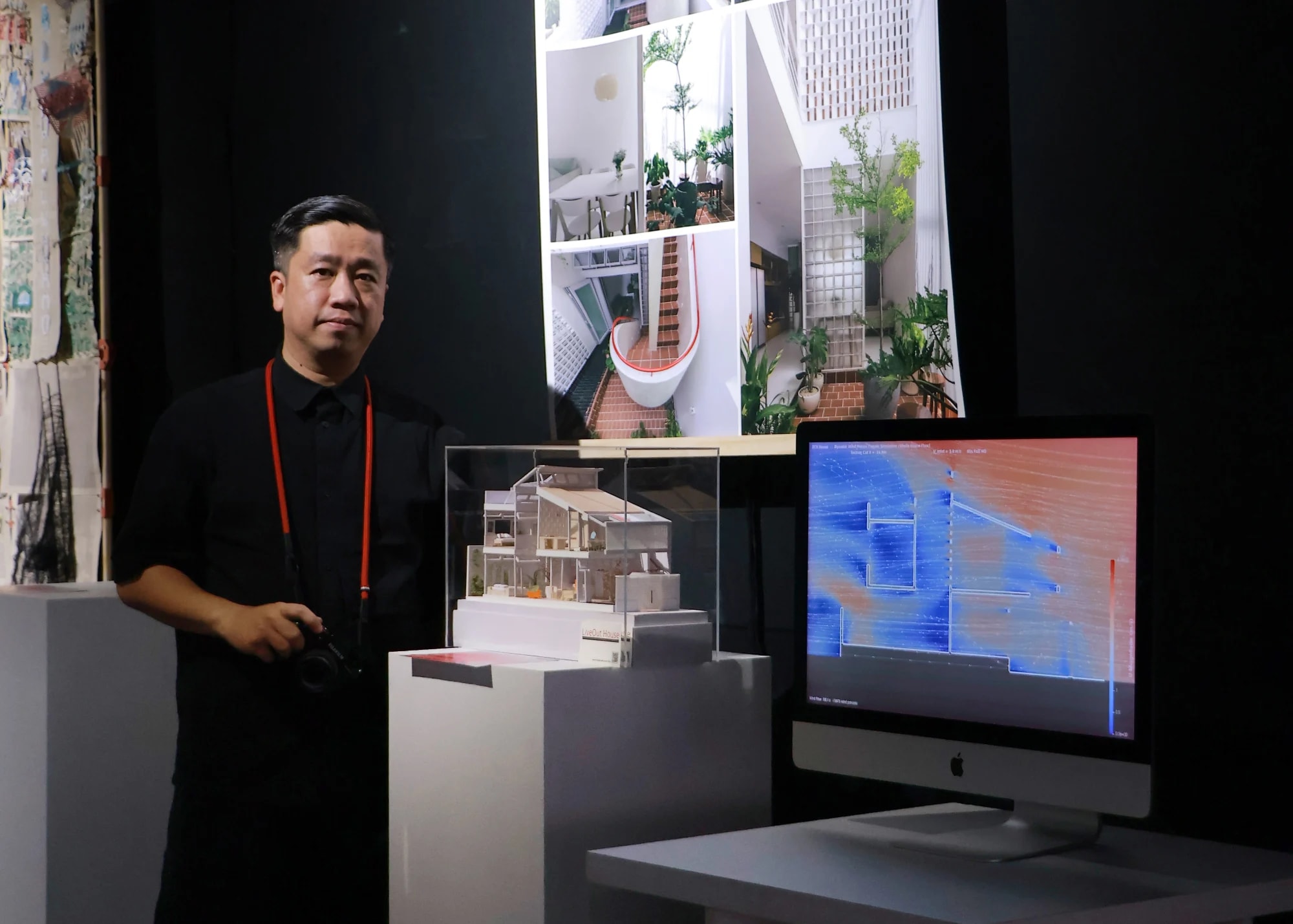
LiveOut House model exhibition and CFD simulation of natural ventilation performance
LiveOut House: Architecture as a Living Envelope in the Urban Climate
Titled “Breathing With the Alley: A Living Envelope for Tropical Micro-Housing,” LiveOut House proposes a climate-responsive approach to urban townhouse design, addressing both the hot and humid climate and the distinctive spatial conditions of dead-end alleys in Ho Chi Minh City.
Under conditions of high temperatures, humidity, and intense solar radiation, urban townhouses often face challenges related to natural ventilation, daylight access, and heat accumulation. Design strategies must therefore extend beyond floor-plan organization and architectural form to address the indoor microclimate from the earliest stages of the design process.
Rather than treating the building envelope as a closed boundary that separates occupants from the external environment, LiveOut House approaches the house as an open system capable of receiving and regulating airflow, daylight, and heat. Operable openings, sun-shading louvers, and transitional spaces are explored to support natural ventilation, improve daylight access, and mitigate the adverse effects of solar radiation.
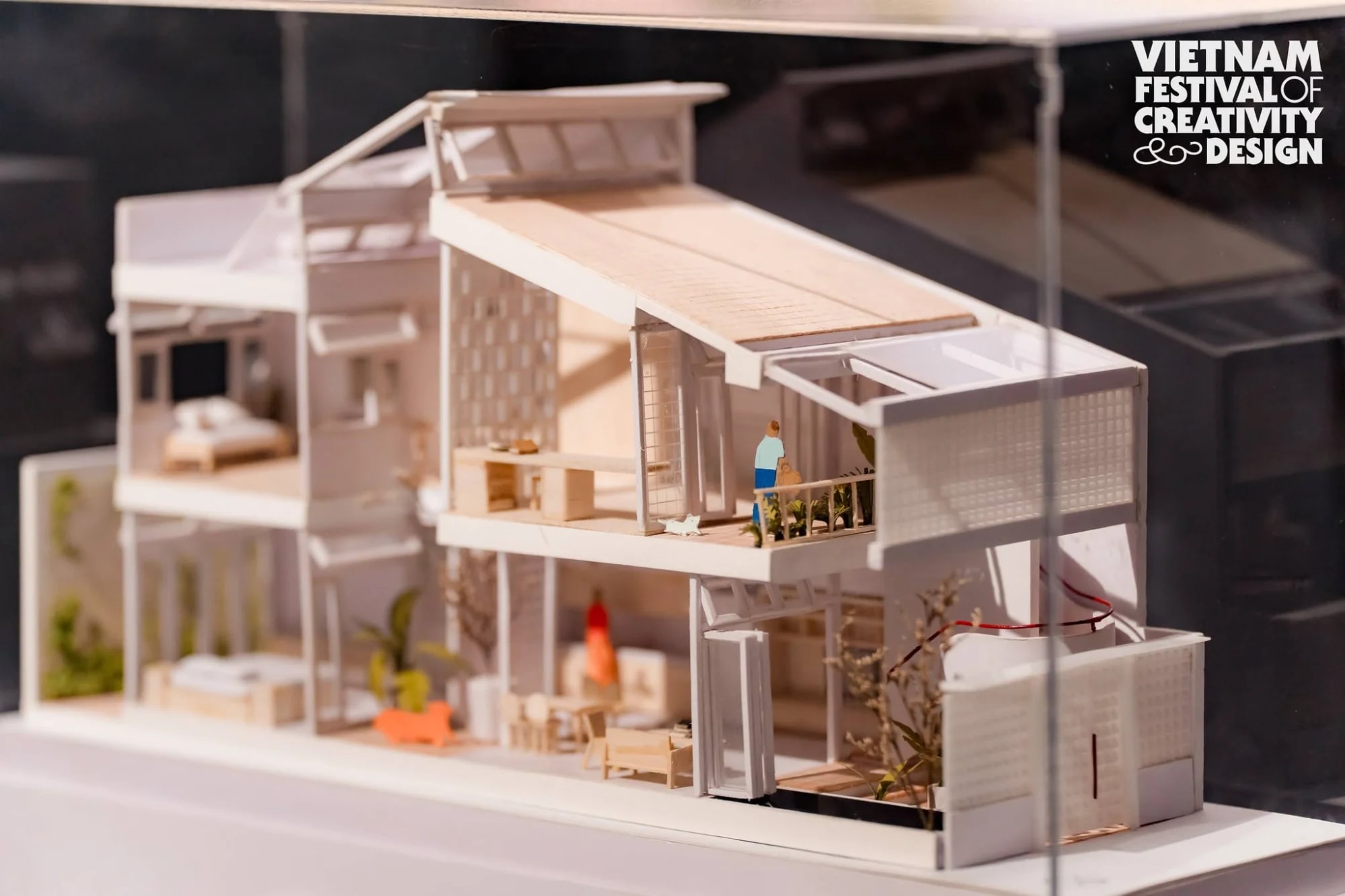
LiveOut House interior space model
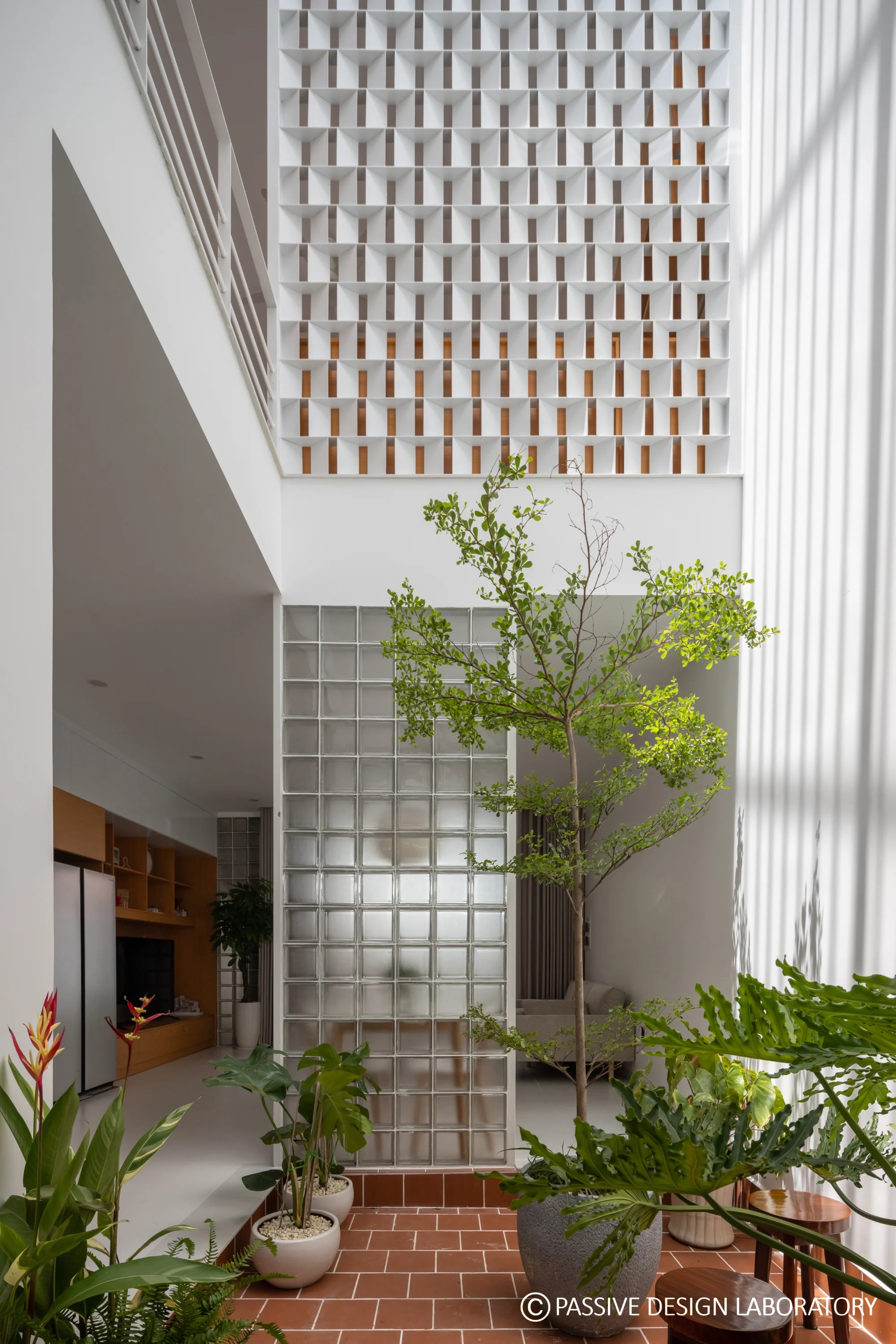
A harmonious and comfortable living space featuring an indoor garden, natural daylighting, and ventilation.
Visualizing Ventilation and Daylighting Performance in Urban Townhouse Design
A key feature of the project is the use of environmental simulation tools to visualize factors that are difficult to perceive through conventional observation alone. Through computational fluid dynamics (CFD) simulations of airflow, daylight analysis, and solar radiation studies, the design proposal is evaluated in relation to architectural massing, spatial organization, opening locations, and surrounding environmental conditions.
The simulation results illustrate airflow patterns and distribution, access to natural daylight, and areas potentially exposed to high thermal loads. These visualizations enable a more intuitive assessment of architectural strategies, supporting design refinement rather than relying solely on intuition or subjective experience.
For urban townhouses with narrow frontages situated within dense alley networks, ventilation and daylighting must be considered alongside factors such as building-to-building distances, surrounding obstructions, solar orientation, and connections between interior spaces. Climate-responsive design therefore requires an integrated approach combining architectural thinking, environmental understanding, and technical analytical tools.
Through LiveOut House, simulation serves not only as a means of evaluating design solutions but also as a medium for communicating architectural ideas, helping viewers better understand the relationship between architectural form and environmental performance.
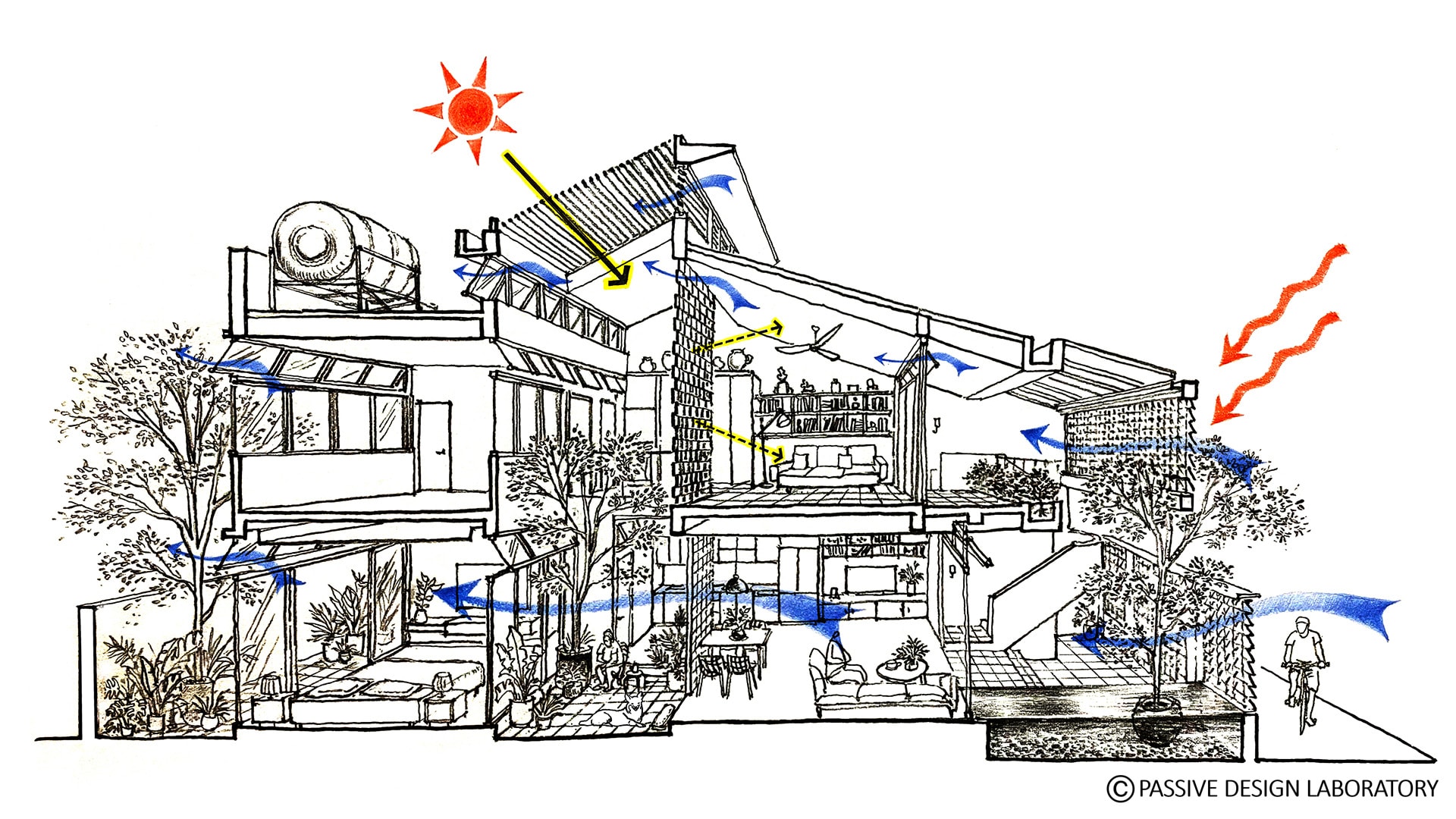
Passive architectural design strategies for adaptation to the hot and humid tropical climate
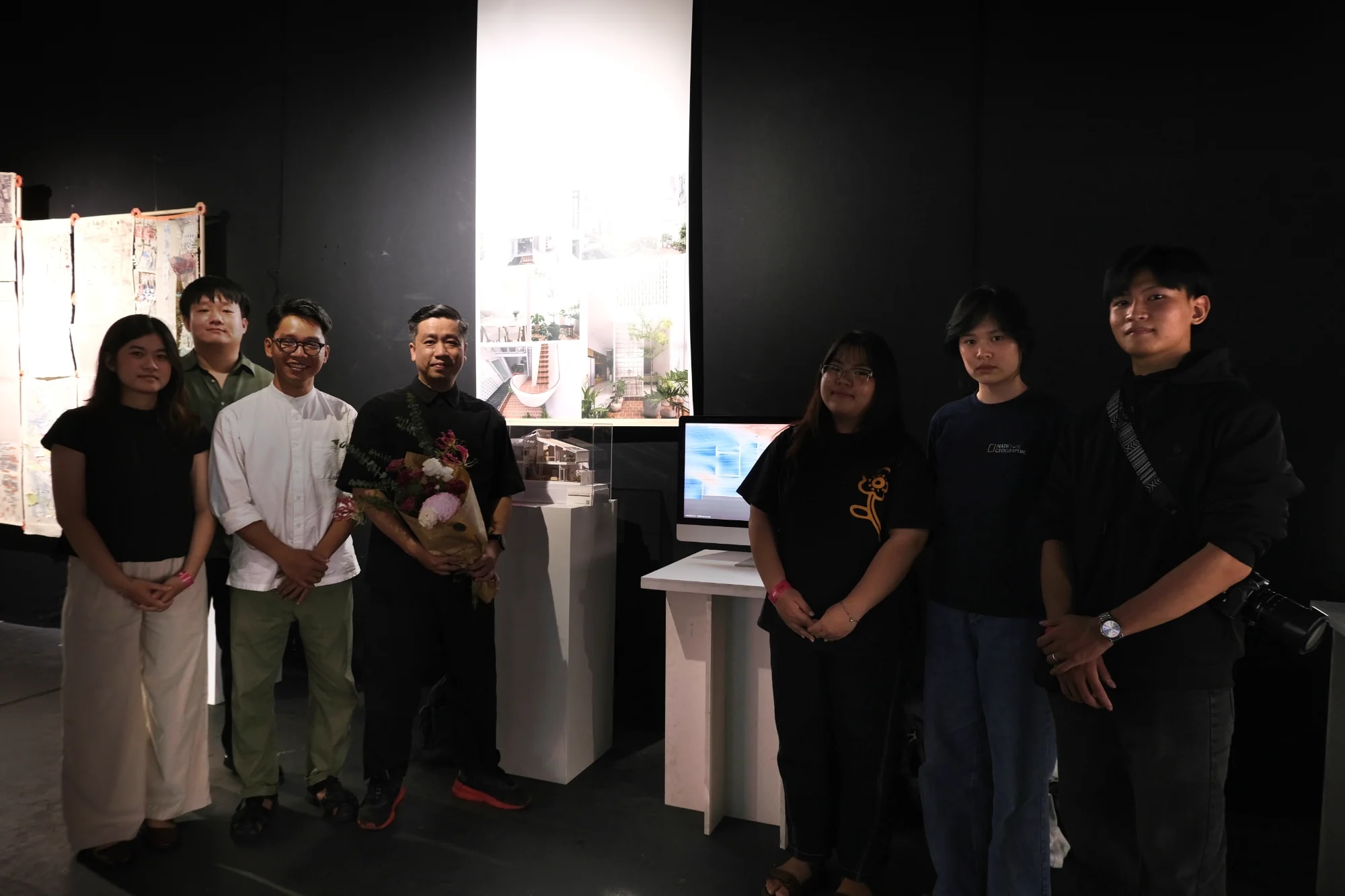
Dr. Arch. Huynh Van Khang and ISCM students collaborated on the project.
Towards Climate-Responsive Architecture for Hot and Humid Tropical Climates
LiveOut House situates the building within the broader context of the urban alley, where circulation, ventilation, daylight, privacy, and community interaction collectively shape the quality of everyday life. Rather than applying generic solutions across different settings, the project adopts a context-sensitive approach grounded in the specific conditions of the site and its surrounding environment. From a sustainable design perspective, harnessing natural ventilation, making effective use of daylight, and controlling solar heat gains can help improve indoor comfort while reducing reliance on mechanical cooling and artificial lighting where conditions permit. These considerations are particularly important for urban housing in Vietnam, where the hot and humid climate places high demands on indoor environmental quality and energy efficiency.
Dr. Arch. Huỳnh Văn Khang’s participation in VFCD 2026 brings research-based environmental design practices closer to the creative community and the wider public. Through LiveOut House, architecture is understood not simply as the creation of forms and spaces, but as an ongoing pursuit of balance between people, buildings, and climate.
In the spirit of Living Festival – Sống.Tạo, LiveOut House proposes a design approach that recognizes the natural environment as an active component of architecture. By translating this perspective into practical strategies for urban housing, the project underscores the importance of climate-responsive design in creating living spaces that are more comfortable, efficient, and sustainable.
🔗 VFCD Website: https://vfcd.events/
🌐 Facebook, Instagram & Threads: @vfcd.events